
Crucial Running Hydration Tips Every Runner Needs

Running makes you sweat, and the longer you run, the more that sweat adds up. Good running hydration is about replacing what you lose before it starts to slow you down. Sweat takes water and electrolytes out of your body together, which is why many runners keep an ION supply drink such as Pocari Sweat next to their water bottle. Short runs and long runs ask different things of you, so your hydration plan should change with them. This guide covers why hydration matters, seven practical tips, and how to choose between water and an electrolyte drink.
Why Is Running Hydration Important for Runners?
Every run is a loss of fluid. Your body heats up, you sweat to cool down, and that sweat carries sodium and potassium out with the water. This is the main reason hydration for runners needs more thought than hydration on an ordinary day.
A few things decide how much you lose:
- Distance and duration: More time on the road means more time sweating.
- Weather: Heat and humidity push your sweat rate up, even when your pace stays the same.
- Individual sweat rate: Two runners on the same route can lose very different amounts of fluid.
That last point is why no single number works for everyone. Good fluids for runners are the ones that match your own sweat, your own route and your own day. Thirst is also a late signal, so waiting for it means you’re already behind.
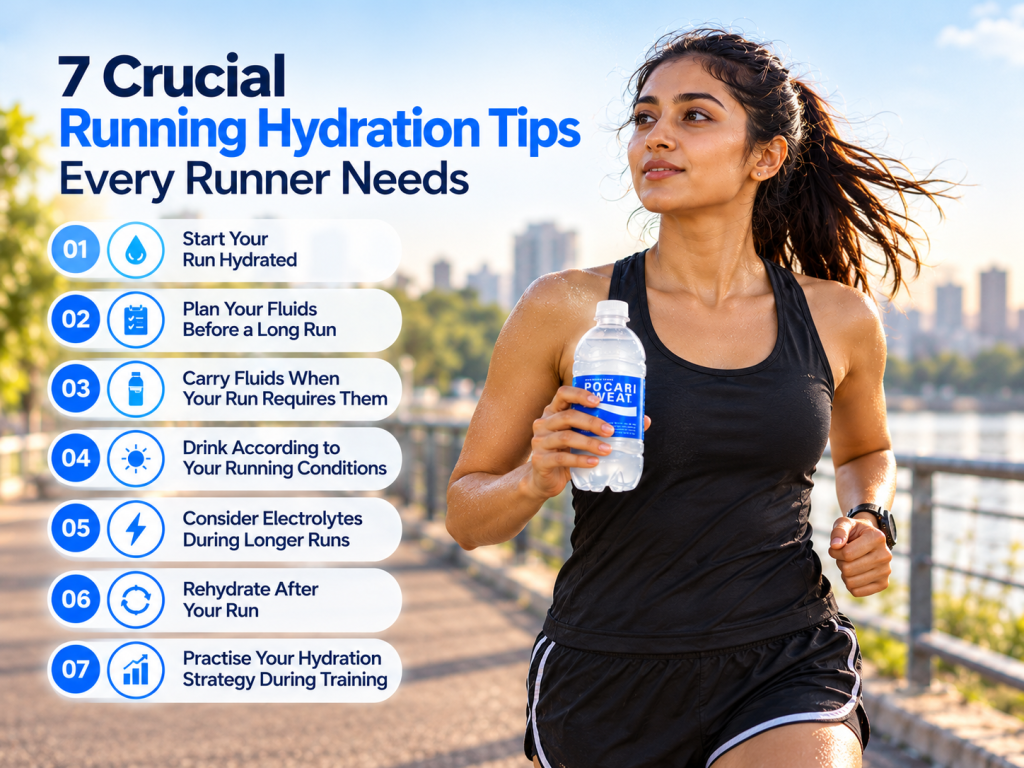
7 Crucial Running Hydration Tips
These running hydration tips are simple on their own. Together they make your runs feel steadier.
Start Your Run Hydrated
Don’t use the first mile to catch up. Drink steadily in the hours before you head out, rather than gulping a large bottle just before. A glass of water or an ION drink in the hour beforehand is often enough for a normal run.
Plan Your Fluids Before a Long Run
Decide what you’ll drink, and roughly where, before you leave. Long run hydration goes better with a plan than with guesswork halfway round. If you want a fuller look at building a routine, our guide to hydration before, during and after workouts is a good place to start.
Carry Fluids When Your Run Requires Them
On a short run near home, you may not need to carry anything. On a longer route, don’t rely on finding a shop or a fountain. A handheld bottle or a running vest means your drink is there when you need it.
Drink According to Your Running Conditions
A cool morning jog and a muggy afternoon run are not the same job. Check the weather and your sweat, then adjust. In hot weather, sip more often. Our 7 simple ways to stay hydrated in summer heat has more on running when it’s warm.
Consider Electrolytes During Longer Runs
Plain water replaces fluid, but it doesn’t put back the minerals sweat takes. For longer or sweatier runs, electrolytes for runners become useful, because an electrolyte drink replaces water and minerals together. Pocari Sweat is an isotonic drink, which means its concentration of salts and sugars sits close to that of your body’s own fluids. Its small amount of glucose alongside sodium helps the body absorb water and ions.
Rehydrate After Your Run
Finishing the run doesn’t end the fluid loss that needs replacing. Keep drinking through the next few hours, and pair it with food when you can. Our hydration tips for a smarter sports recovery drink covers recovery in more detail.
Practise Your Hydration Strategy During Training
Race day is a bad time to try something new. Test your drink, your timing and your carrying method on your training runs. If something upsets your stomach, you want to find out on a Sunday long run, not at the start line.
How Running Hydration Needs Change During Long Runs
Hydration during long runs is not a straight multiple of a short run. Several things shift your needs as the distance grows:
- Run duration. The longer you’re out, the more fluid and minerals you lose, so plain water may start to fall short.
- Sweat rate. Heavy sweaters need to replace more, and sooner.
- Temperature. Heat raises your sweat output, even at an easy pace.
- Humidity. Sweat doesn’t evaporate as easily in muggy air, so your body keeps working to cool down.
- Pace and intensity. Harder efforts generate more heat and more sweat.
In practice, short, easy runs can be covered with a drink beforehand and one afterwards. Longer or harder runs usually need a plan for during the run too. Watch how you feel, and learn the signs of dehydration so you can spot trouble early.
Marathon Hydration: What Should Runners Consider?
Marathon hydration starts weeks before the race. The aim is a plan you’ve already tested, not a new one on the day.
- Plan during training. Use your long runs to work out what you’ll drink and how often.
- Practise with the same strategy. Whatever you’ll use on race day, use it in training first, including the same drinks.
- Think about fluids and electrolytes. Over a long distance, you lose both, so your plan should cover both.
- Adjust for weather and your own needs. A hot race day calls for a different approach from a cool one, and everyone sweats differently.
Our full guide to hydration during marathon training goes further into building this plan.
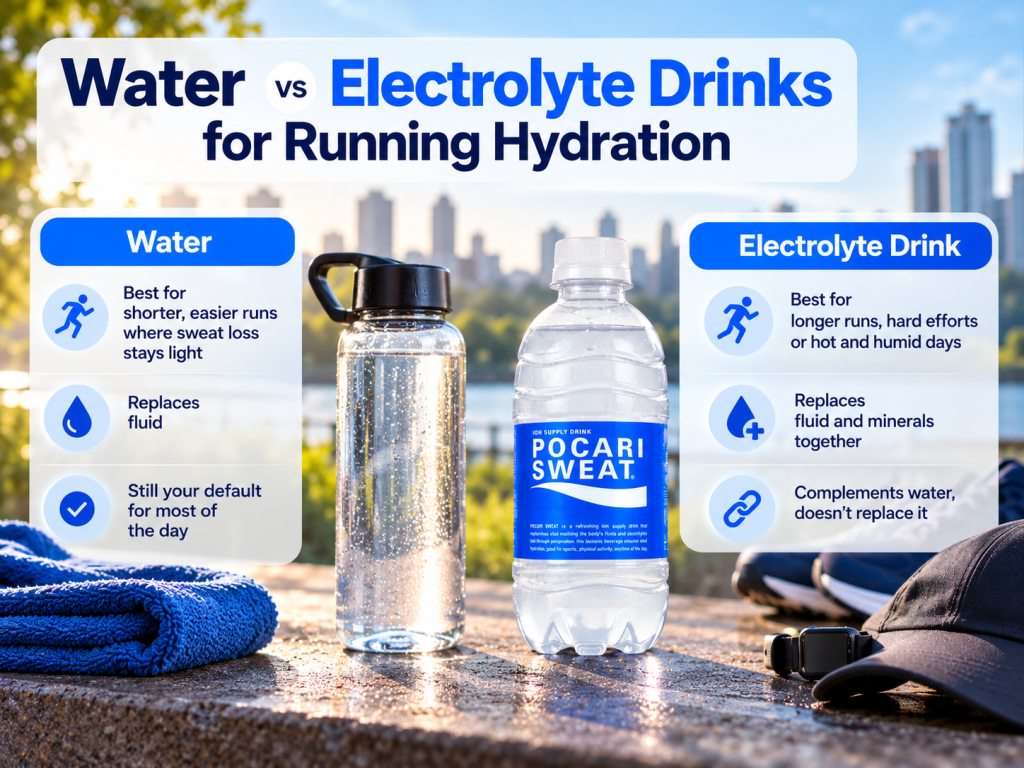
Water vs Electrolyte Drinks for Running Hydration
Water and electrolyte drinks do different jobs, so the best choice depends on the run.
| Water | Electrolyte drink | |
| Best for | Shorter, easier runs where sweat loss stays light | Longer runs, hard efforts, hot or humid days |
| What it replaces | Fluid | Fluid and minerals together |
| Worth remembering | Still your default for most of the day | Complements water, doesn’t replace it |
For longer runs, think about three things: how long you’ll be out, how much you sweat, and how hot it is. Our piece on ION drinks that truly replenish your body explains how electrolyte drinks work, and the top 5 isotonic drinks to replenish your body right can help you compare options.

Final Thoughts on Running Hydration
Good hydration while running is a process. You must stay hydrated before running, plan for long runs ahead of time, remember to bring water or other fluids with you, and hydrate according to the conditions. For most casual runs, water is sufficient. At some point during or after a long endurance session or if you are sweating profusely, you need to replenish not only water but also electrolytes. A good sports drink like Pocari Sweat can help you recover lost fluids and minerals. It’s important to test your hydration strategy during training so that it works well for you during a race. If you want to know more about developing daily hydration habits that will help you prevent dehydration, see our guide to staying hydrated all the time.
FAQs
How much should runners drink?
There is no specific amount that each runner should aim to drink. It depends on how much they sweat, how long they run for, the conditions that they are running in, and other factors. Drink steadily during the run, rather than waiting for thirst to kick in. Listen to your body to know when to stop; for example, your thirst or the colour of your urine can signal that it is time to slow down.
What should I drink during a long run?
During a long run, water is sufficient for shorter/easy paces. If the run is long or hot, or if the runner sweats a lot, an electrolyte drink can help to replenish lost minerals in the body, in addition to water. Experimenting during training is the best way to know what to drink during a race.
Do runners need electrolytes?
Electrolytes are not necessary for every run. For short/easy runs, water is probably sufficient. Electrolytes may be needed on long runs, hot days, or if the runner sweats a lot. Electrolytes in combination with water can help to replenish minerals that are lost through sweat.
How do you stay hydrated during a marathon?
Come hydrated to the start line, follow the fuelling plan that was practiced during training, and make sure to consume enough fluids as well as electrolytes if needed. The plan should take the race conditions into account, such as the temperature, as well as how much the runner is likely to sweat.
Should I drink electrolytes after running?
After a long or strenuous run, an electrolyte drink can help to replenish fluids and minerals lost during the run. After a short/easy run, water may be sufficient.
Follow us on Instagram for hydration tips, wellness insights, product updates & more.