
You don’t need a heatwave or a marathon to end up dehydrated. Most people get there the boring way: a long meeting, a warm commute, and a day so packed you forget to drink anything until 4pm and suddenly your head hurts. Your body needs a steady supply of fluid just to keep running, and that supply runs out faster than people assume. This is a simple look at how to prevent dehydration, what causes it, how to spot it early, and a few habits that make dehydration prevention something you barely notice you’re doing. Worth also reading up on the signs of dehydration so you know what to watch for.
What Causes Dehydration in Daily Life?
It’s rarely just “forgot to drink water on a hot day.” A few things usually stack up:
Sweating. Even light sweating, from a warm room or a short walk, takes water and minerals with it.
Hot weather: Higher temperatures make you sweat more, even standing still.
Exercise: Any real physical effort speeds up fluid loss, obviously.
Not drinking enough: Sounds too simple to matter. It’s usually the actual reason.
Illness: Fever, vomiting, diarrhoea, these drain fluids fast, and not in a way you can just sip your way out of quickly.
Busy schedules: Long meetings, deadlines, and a day where you genuinely didn’t sit down. Hours pass, no water touched.
Put two of these together, say a hot day and a packed schedule, and dehydration shows up faster than you’d expect.
9 Simple Ways to Prevent Dehydration
None of these are complicated. You don’t need all nine at once either; a few of them stacked together already make a real difference.
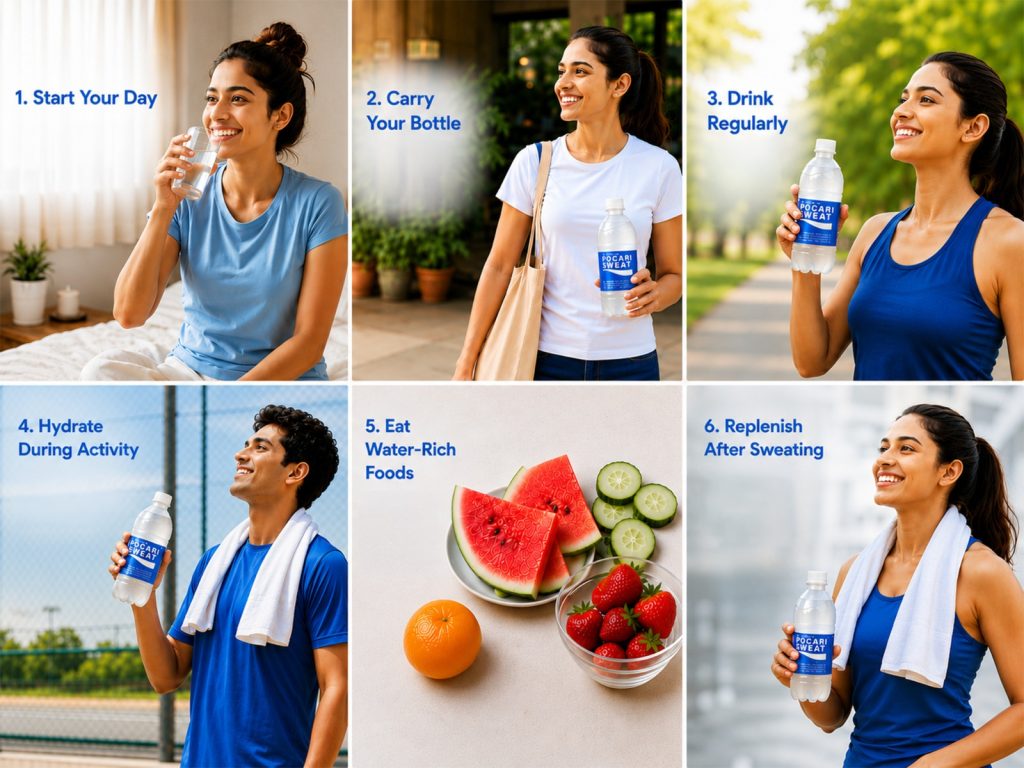
1. Drink Fluids Regularly Throughout the Day
Small sips, spread out, and beat one big glass every few hours. It’s not exciting advice, but it works.
2. Start Your Day With Hydration
You lose fluid overnight just from breathing and skin, so mornings start you behind already. A glass of water before anything else gets you a head start.
3. Keep a Water Bottle Within Reach
Out of sight, out of mind. Genuinely that simple. A bottle on your desk gets used. A bottle in another room doesn’t.
4. Drink More When You’re Physically Active
More movement, more sweat, and more fluid and minerals lost. This is one of the more obvious daily hydration tips, but people still skip it mid-workout. Our hydration tips for a smarter sports recovery drink cover this properly.
5. Pay Attention to Hot and Humid Weather
Heat and humidity push your body to sweat more even when you’re doing nothing. Check the weather, drink more to match it, and don’t just default to the same amount every day regardless. 7 simple ways to stay hydrated in summer heat has more on this if the topic interests you.
6. Include Fluid-Rich Foods in Your Diet
Cucumber, watermelon, oranges. Water isn’t the only way fluid gets into your body, and food is an easy, low-effort top-up most people don’t think about.
7. Replenish Fluids After Sweating
Sweat takes water and electrolytes together, not separately. So a glass of plain water after a workout only fixes half the problem. A drink with electrolytes in it, something like Pocari Sweat, covers the part water alone misses.
8. Make Hydration Part of Your Daily Routine
Attach it to something you already do. A glass with breakfast. One before you leave the house. It stops being a task the second it’s tied to a habit that already exists.
9. Recognise Early Signs of Dehydration
This one might matter more than the other eight combined. Catching it early means fixing it before it turns into a headache or a wall of fatigue you can’t explain. Knowing the signs of dehydration and actually acting on them, instead of shrugging and carrying on, is the real habit here.
What Are the Common Signs of Dehydration?
Thirst, obviously, though it’s not always the earliest sign. Dry mouth. Darker urine, pale is fine, and dark yellow means drink something. Fatigue that doesn’t match how little you’ve actually done. Headaches, more often than people credit dehydration for. And reduced physical performance, feeling slower or weaker than usual without a clear reason. Full breakdown of dehydration symptoms if you want to go deeper.
None of these show up all at once. They creep in, which is exactly why they’re so easy to write off as something else.

How Much Should You Drink Each Day?
There’s no single number that works for everyone, and honestly, chasing one isn’t that useful. What actually shifts your needs:
Activity level: more movement means more sweat, which means more to replace. Climate, heat, and humidity push sweat output up even on a lazy day. Body size: bigger bodies generally need more. Diet, water-heavy food (fruit, soups, and vegetables) counts toward your total. And individual stuff, illness, pregnancy, whatever your day looks like, all shift the number up or down.
Skip the fixation on eight glasses. Pay attention to thirst, urine color, and energy levels instead, and adjust from there.
Water vs Electrolyte Drinks for Daily Hydration
Plain water works well for most of an ordinary day. Desk work, errands, nothing particularly demanding. It’s free, it’s everywhere, and it does the job. Top 5 isotonic drinks to replenish your body right is worth a look if you want to compare electrolyte options properly.
Electrolytes earn their place once you’ve lost more than just water, a workout, a hot day, or a stretch of real sweating. Plain water doesn’t replace sodium and potassium, and too much of it after heavy sweating can actually thin out the electrolytes you’ve still got.
That gap, after significant sweating, is really where the two paths split. One drink replaces fluid only. The other replaces fluid and minerals together. Not the same job.
Daily Hydration Habits That Are Easy to Maintain
Hydration reminders: A phone alarm, a habit app, whatever nudges you before thirst does.
Drinking with meals: A glass at breakfast, lunch, and dinner. No extra effort; a decent chunk of your daily intake handled.
Keeping fluids accessible: desk, bag, car. Willpower loses to convenience most days, so remove the friction instead of relying on discipline.
Adjusting for activity and weather: More on hot days or workout days, less on quiet indoor ones. Doesn’t need to be precise, just responsive to what’s actually happening.
This is really the whole idea behind how to stay hydrated without turning it into a chore.

Final Thoughts on How to Prevent Dehydration
Preventing dehydration was never about hitting a strict number of glasses a day. It’s about noticing early and building habits that run in the background instead of ones you only remember once you’re already thirsty. Drink regularly, eat foods with decent water content, and reach for something like Pocari Sweat when you’ve genuinely been sweating. Catch it early instead of waiting for thirst to force the decision, and staying hydrated stops being something you think about at all.
FAQs About Preventing Dehydration
How can I prevent dehydration naturally?
Drink through the day instead of in one go, eat water-rich food like cucumber and watermelon, and pay more attention on hot or active days.
How do I know if I’m dehydrated?
Thirst, dry mouth, darker urine, tiredness, headaches, or just performing worse than usual. Gradual, not sudden.
Does drinking water prevent dehydration?
Mostly, yes. But after heavy sweating, it doesn’t replace lost electrolytes, so a drink with sodium and potassium in it does more.
What should I drink when I’m dehydrated?
Water for mild cases. For anything following real sweating, heat, or exercise, something like Pocari Sweat puts back fluid and minerals together, which plain water can’t.
Follow us on Instagram for hydration tips, wellness insights, product updates & more.