How to Choose the Best Sports Drink for Hydration

Exercise pulls a lot out of your body that water alone doesn’t replace. Sweat carries sodium and potassium with it, and once a session runs long enough, your body starts needing more than fluid alone can offer. This is exactly the gap the best sports drink for hydration is meant to close: fluid and minerals, together, rather than tackling each one separately.
A good sports drink supports steady hydration through a longer session, helping you keep pace with what your body’s losing rather than falling behind on it. But not every bottle on the shelf earns that description. Before picking a best sports drink, it’s worth understanding what’s actually in it, because plenty of what’s marketed as a hydration drink is closer to flavoured sugar water than a genuine hydration tool.
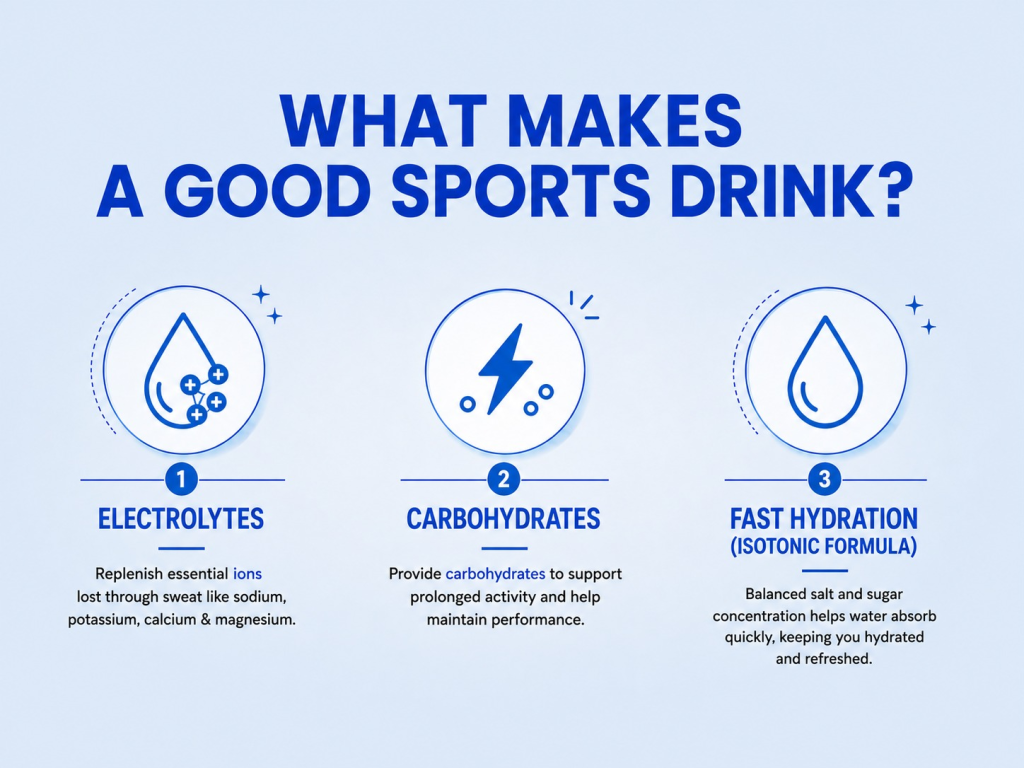
What Makes a Good Sports Drink?
A few things separate a genuinely useful sports drink from an average one: mineral content, a sensible amount of carbohydrate, and how the two are balanced together.
Ions are the non-negotiable part. Sodium is the main one lost through sweat, alongside smaller amounts of potassium and magnesium, and replacing them is part of what supports steady hydration and comfort late in a session. Sports drinks with ions work because they replace what’s leaving your body in something close to the right proportions, not just water for water’s sake.
Carbohydrates come up often in this conversation too, particularly for anything past the hour mark. Research on sports drinks and ions generally points to carbohydrate content playing a supporting role during longer efforts, though it’s a smaller piece of the picture than mineral balance. An ion hydration drink built with a modest carbohydrate content tends to sit more comfortably than one loaded with sugar.
Isotonic sports drinks are worth understanding specifically because they’re formulated to match the concentration of salts and sugars found in your blood. That match is what allows for smoother absorption, so the fluid actually gets where it’s needed rather than sitting in your gut. Among hydration drinks, isotonic formulas are generally the most balanced option for typical training.
Sports Drinks vs Water: What’s the Difference?
Water does a lot of the work for most physical activity, and there’s no need to overcomplicate that. For short sessions, light workouts, or anything under about 45 minutes in mild conditions, water is genuinely enough to keep you hydrated.
Sports drinks earn their place once the session gets longer, more intense, or hotter. They replace sodium lost through sweat, something water can’t do on its own. Beyond roughly an hour of sustained effort, particularly in heat, a sports drink can support hydration more directly than water alone.
The choice really comes down to duration and intensity: water for short, easy efforts, a proper sports drink once you’re sweating heavily or training for longer than an hour.
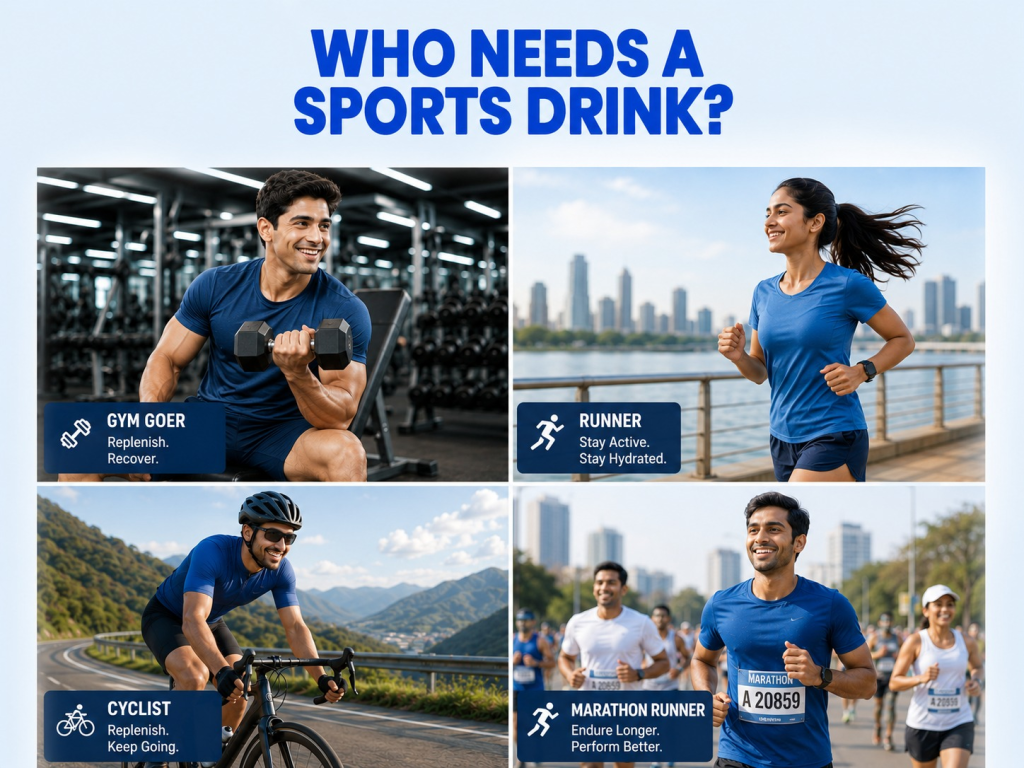
Who Should Drink a Sports Drink?
Gym-goers: For shorter strength sessions, water usually covers it, but longer or higher-intensity gym sessions benefit from the same mineral support any extended activity needs.
Runners: A hydration drink for running matters most once distance stretches past the 60-minute mark, when sodium loss starts to add up.
Cyclists: Long rides mean long sweat exposure, and ion drinks for cyclists help support steady hydration through the miles that build up once a few hours have passed in the saddle.
Marathon participants: Few activities demand more from your hydration strategy than a marathon. Hydration during marathon training needs to be practised well before race day, not improvised on it, since sweat rate and sodium loss both interact in ways that are hard to manage on the fly.
Across all of these, the common thread is the same: the longer and harder you’re training, the more a genuine sports drink, among the best hydration drinks for athletes, starts to make sense over water. For shorter, lighter activity, it simply isn’t necessary. Among the best drinks for athletes generally, the ones worth reaching for are the ones matched to how long and how hard you’re actually training, not the ones with the flashiest branding.
Tips for Choosing the Best Sports Drink
A few practical checks make this decision far simpler.
Check the mineral content: Sodium should be clearly listed, along with potassium in most cases. If a label leans heavily on flavouring and colour without naming actual minerals, that’s a sign to look elsewhere.
Consider sugar levels: Some sports drinks lean far sweeter than they need to be. A useful drink supports hydration during exercise without tipping into syrup territory, since excess sugar can slow absorption rather than help it.
Match the drink to your activity level: Hydration before workout sessions calls for something lighter, while a longer session benefits from a proper mineral-carbohydrate mix built for workout hydration. Not every session needs the same formula.
Look for quick hydration: A quick hydration drink absorbs at close to your body’s own pace rather than sitting heavy, which matters most mid-session. The best options offer quick hydration and steady hydration drinks together, rather than one at the expense of the other, and for anyone training in heat, the best sports drink for hot weather needs a stronger mineral profile to keep pace with heavier sweat loss.
Why Pocari Sweat Supports Active Hydration
Pocari Sweat was developed by Otsuka Pharmaceutical, whose background sits in intravenous fluid science rather than flavoured beverages, and that history shapes how the drink is built.
Balanced mineral composition: Sodium, potassium, calcium, and magnesium are formulated to sit close to the concentration found in human body fluid, which is what allows Pocari Sweat to function as a genuine hydration drink rather than a sweetened afterthought. You can read more about how the formulation works if you want the detail behind it.
Smooth fluid absorption: As an isotonic drink, it moves through the body at close to the pace your own fluids do, supporting steady hydration alongside thicker, heavily sugared alternatives.
Suitable before, during, and after exercise: Unlike drinks built around a quick spike before a session, Pocari Sweat’s mild, balanced profile is designed to work across the whole window, topping up beforehand, supporting you through it, and staying with you afterwards. If you’re curious about the background, Pocari Sweat’s decades of research and the full origin story are both worth a look, and the Pocari Sweat India range is there if you want to try it yourself.
Final Thoughts on Finding the Best Sports Drink for Hydration
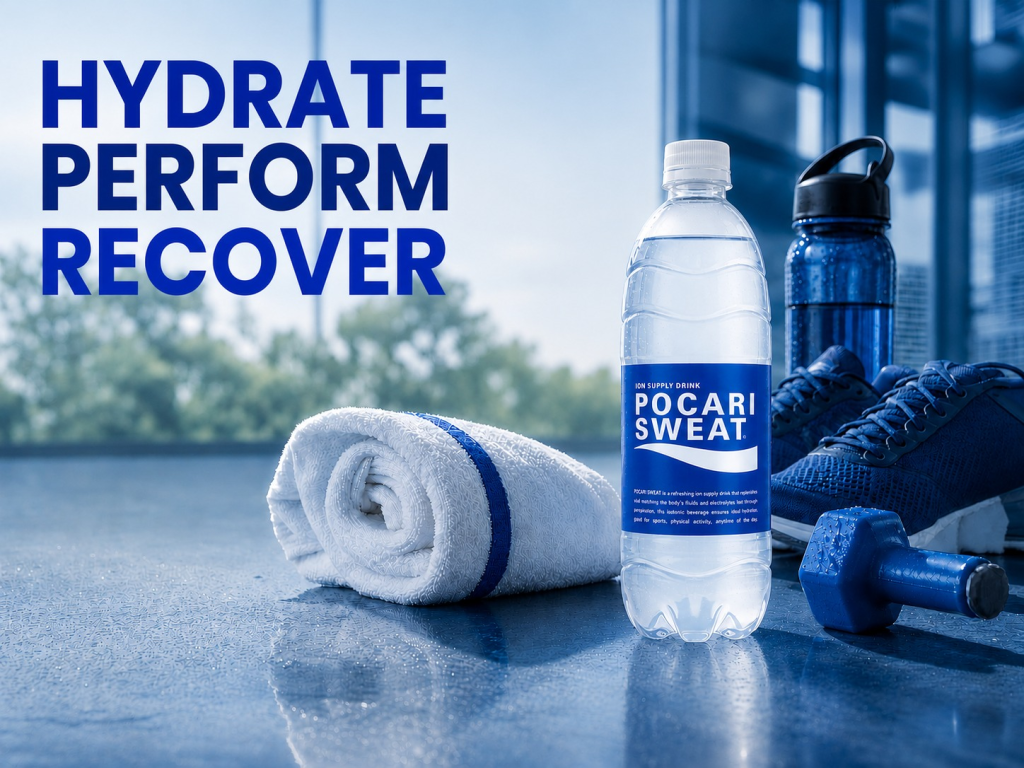
The right sports drink comes down to matching the formula to what you’re actually doing: how long you’re training, how hard, and in what conditions. Minerals and carbohydrates both play a role, but only in the right proportions, and a drink built to sit close to your body’s own fluid balance will generally suit you better than one built mainly around flavour. Whether you’re a gym-goer, a runner, or training for a marathon, choosing a drink like Pocari Sweat, formulated with genuine hydration science behind it, gives you a dependable option before, during, and after every session.
FAQs
What is the best sports drink for hydration?
One with a clearly listed mineral profile, sodium and potassium especially, a sensible carbohydrate content; and a formulation close to your body’s own fluid balance for smooth absorption.
What should you look for in a sports drink?
Mineral content, sugar levels, and how well the drink matches your specific activity, whether that’s a short gym session or a longer endurance effort.
Are sports drinks better than water during exercise?
For short, light sessions, water is enough. Past about an hour, or in heat, sports drinks can be more useful since they replace sodium in a way that water alone can’t.
When should you drink a sports drink before or after a workout?
Both have a place. A lighter drink before helps you start well-hydrated, while a proper mineral-carbohydrate mix during and after helps you keep pace with fluid loss.
Do sports drinks help replace lost minerals?
Yes. That’s their core function, replacing sodium, potassium, and other minerals lost through sweat, alongside fluid, which is something plain water can’t do on its own.