How to Rehydrate After Sweating: 7 Essential Steps
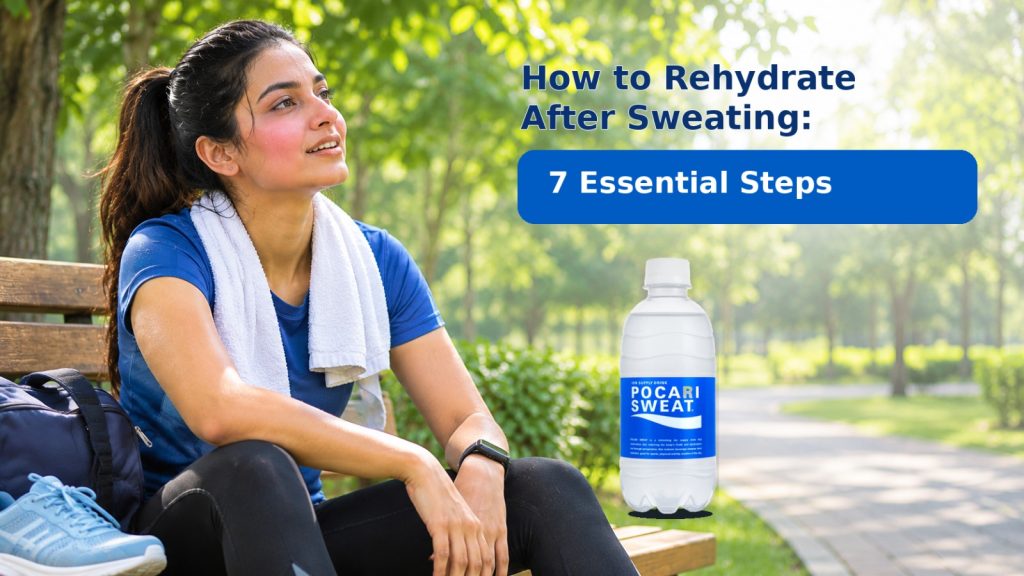
Sweating is how your body cools down, and it’s a good thing. But sweat is made of water and minerals, so you need to put them back. This guide shows how to rehydrate after sweating in seven easy steps. It also covers the minerals you lose, how much to drink and when an ION supply drink makes sense. Good rehydration after sweating doesn’t need fancy tools, only a little planning and steady sips.
What Happens to Your Body When You Sweat Excessively?
When you get hot, your body releases sweat onto your skin. As it dries, it carries heat away and cools you down. That’s helpful, but it also means sweat fluid loss adds up fast during long or hard effort.
Sweat isn’t just water. It also holds minerals, mainly sodium and chloride, with smaller amounts of potassium, calcium and magnesium. So excessive sweating takes away both fluid and minerals.
How much you sweat depends on a few things:
- The heat and humidity around you
- How hard and how long you work
- Your body size and fitness level
- What you wear
If you don’t replace what you lose, you can slip into dehydration after exercise. You may feel thirsty, tired and dizzy, get a headache or find that cramps come more easily.
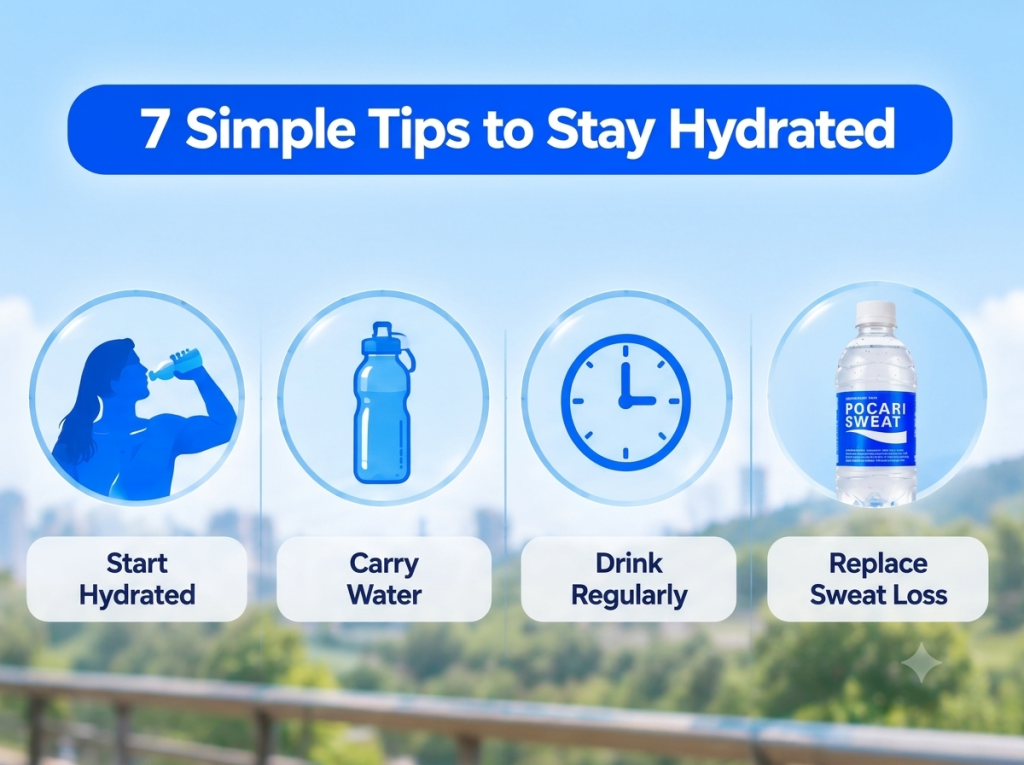
7 Essential Steps to Rehydrate After Sweating
1. Move to a Cooler Environment
Stop and rest in the shade or in an air-conditioned room. If you keep sweating because you’re still hot, you keep losing fluid. Cooling down first helps every other step work better.
2. Begin Replacing Lost Fluids Gradually
Start with a few sips of water, then keep going over the next hour or two. This is the heart of post-workout hydration. Small, steady drinks are taken in better than one big gulp.
3. Assess Your Fluid Loss
Take a quick look at how much you’ve lost. Are you very thirsty? Is your urine dark? Do you feel weak? For a more exact check, weigh yourself before and after exercise. Each kilogram you lose is roughly a litre of fluid. This helps you replace lost fluids with some accuracy.
4. Replenish Lost Ions and Minerals When Necessary
If you’ve had a long, heavy sweat, water alone puts back the fluid but not the minerals. Salty food, or a drink with sodium and other ions, can fill that gap. This matters most after mineral loss through sweat during long sessions in the heat. After a short, easy walk, water is enough.
5. Eat a Balanced Recovery Meal
A normal meal is one of the best recovery hydration tips. Fruit, vegetables, rice, curd, dal and a little salt give you water, minerals and energy together. You don’t need anything special.
6. Avoid Drinking Excessive Amounts at Once
Gulping a litre or more in one go can upset your stomach. In rare cases, drinking far too much can thin out the salts in your blood. Spread your drinks out instead.
7. Monitor Recovery and Continue Hydrating
Keep an eye on thirst, urine colour and energy. Pale yellow urine is a good sign. Carry on sipping through the day until you feel normal. If you still feel unwell after several hours, speak to a doctor.
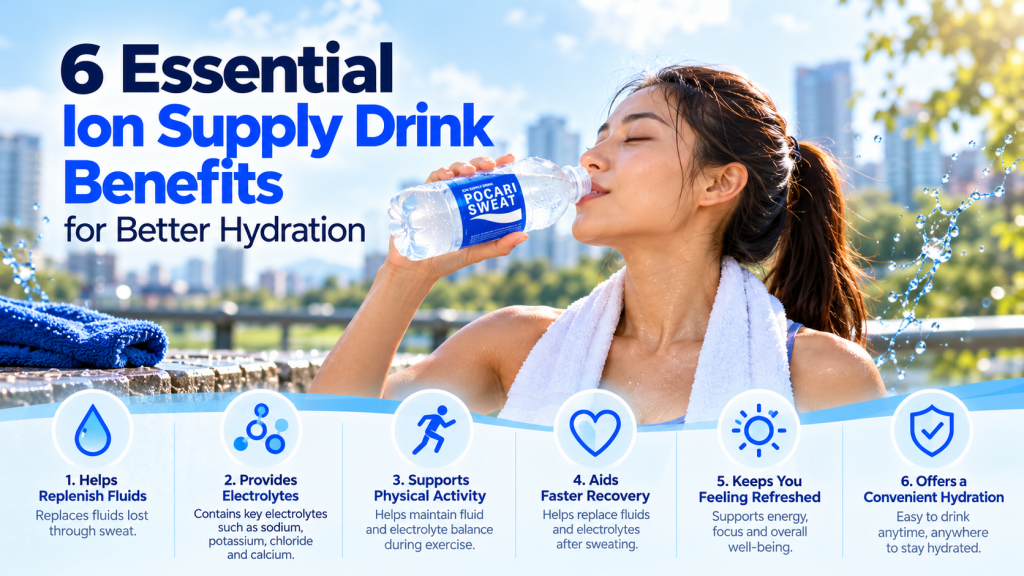
Which Minerals and Ions Does Your Body Lose Through Sweat?
Some of the main minerals and ions lost through sweat include sodium and chloride, which come from salt. That’s why sweaty clothes can feel gritty and why your sweat tastes salty. You also lose other important electrolytes, including potassium, calcium and magnesium, in varying amounts
Not everyone sweats the same way. Your sweat mineral composition depends on your genes, your fitness, the weather and how well you’re used to the heat. Two friends doing the same workout can lose very different amounts of sodium loss during sweating.
The good news is that normal meals and suitable drinks usually put these minerals back. You don’t need to count them unless you train for long hours in the heat.
Water vs ION Supply Drinks: What Is Better After Sweating?
The water vs ION supply drink question depends on how much you sweated.
Water is a great choice after light activity, such as a short walk, a quick gym session or a day at the office. It has no sugar and no cost.
After long or heavy sweating, your body needs more than water. You’ve lost minerals too, and an ION supply drink can help with both. For example, the Pocari Sweat ion supply drink is made to put back water and ions lost in sweat. That makes it a handy one of the drinks after sweating when you’ve been out in the heat for hours.
Keep these points in mind when you choose a drink:
- How long and how hard you worked: Longer and harder means more need.
- Sugar and calories: Most ION supply drinks have some sugar, so read the label.
- Your health: If you have a medical condition or a restricted diet, ask your doctor first.
How Much Fluid Should You Drink After Sweating?
There’s no single number, because needs differ from person to person. A longer workout, a faster sweat rate and hotter weather all raise how much you should drink.
Here’s a simple way to work it out. Weigh yourself before and after exercise. For every kilogram you lose, aim to drink about one and a half litres over the next few hours. You need a bit more than you lost because you keep passing some urine. Treat this as a rough guide, not a rule.
Aim for the middle ground. Too little leaves you dehydrated, and too much, too quickly, can upset your stomach or thin out the salts in your blood. For ongoing workout hydration, drink steadily before, during and after exercise.
Common Mistakes to Avoid During Post-Sweat Hydration
Most rehydration mistakes are easy to fix:
- Waiting too long to drink: Start sipping soon after you stop, not hours later.
- Gulping too much water at once: Slow and steady works better.
- Thinking every workout needs an ION supply drink: A 30-minute easy session usually needs only water.
- Ignoring signs of dehydration: Dark urine, dizziness and a pounding headache are warnings.
- Training on through heat symptoms: If you feel faint, confused or very unwell, stop, cool down and get help.
Conclusion
Sweating can be quite normal to do. Rehydrating can be done easily by simply cooling down, sipping water regularly, eating a healthy meal and adding minerals if you have had a long or intense sweat. Choose what you drink depending on how much you have sweated and monitor how you’re feeling. If you’re not seeing any improvements in your symptoms speak to a doctor.
FAQs
1. How can I best rehydrate after excessive sweating?
Cool down and slowly sip water over a few hours. If you have been sweating for a long time add some salty foods or ION supply.
2. What minerals do we lose when we sweat?
Primarily sodium and chloride but also small amounts of potassium, calcium and magnesium.
3. Should I just drink water after a sweaty workout?
Yes if you have had a short or light workout. However if you have had a long strenuous workout or in very hot conditions you may need to replace minerals.
4. When should I have an ION supply?
Consider having one after a long or intense workout or if you have had a lot of sweat in the heat. Have with water and check the label for sugar.
5. How long will it take me to recover from dehydration due to sweating?
Often, mild dehydration can be resolved within a few hours of having regular fluids. If you are still feeling unwell after this, speak to a doctor.