ION Supply Drink Ingredients: 5 Hidden Label Clues
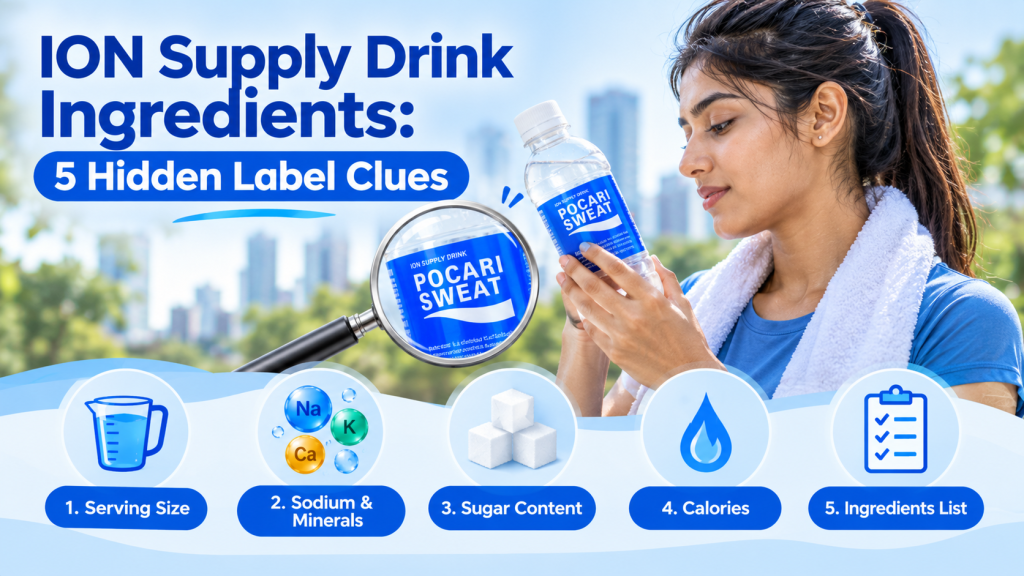
Reading ION supply drink ingredients takes less than a minute, but most of us skip it. Two bottles can look the same and still have very different amounts of minerals, sugar and calories. A quick look at the hydration drink labels tells you which one fits your day. Here’s what usually goes into the hydration drink composition, five label details worth checking, and how to read the Pocari Sweat label.
What Ingredients are present in ION supply?
Most ION supply will have a similar format, the specific ingredients will depend on the brand but commonly will contain:
Water: The first ingredient is water as there will be more of this.
Sodium and Potassium: These are the main ions. They are usually present as salt (sodium chloride) and potassium chloride.
Calcium and Magnesium: Some will contain a small amount of calcium and magnesium, often as calcium lactate or magnesium salt. These are important minerals which you can get from food.
Carbohydrates: This provides a sweet taste and gives some energy. Some will contain glucose or fruit juice.
Taste and Freshness: This contains citric acid, natural flavouring and vitamin C to give it a nice taste and keep it fresh.
This makes up the ION supply. The first ingredient will always be the most present.
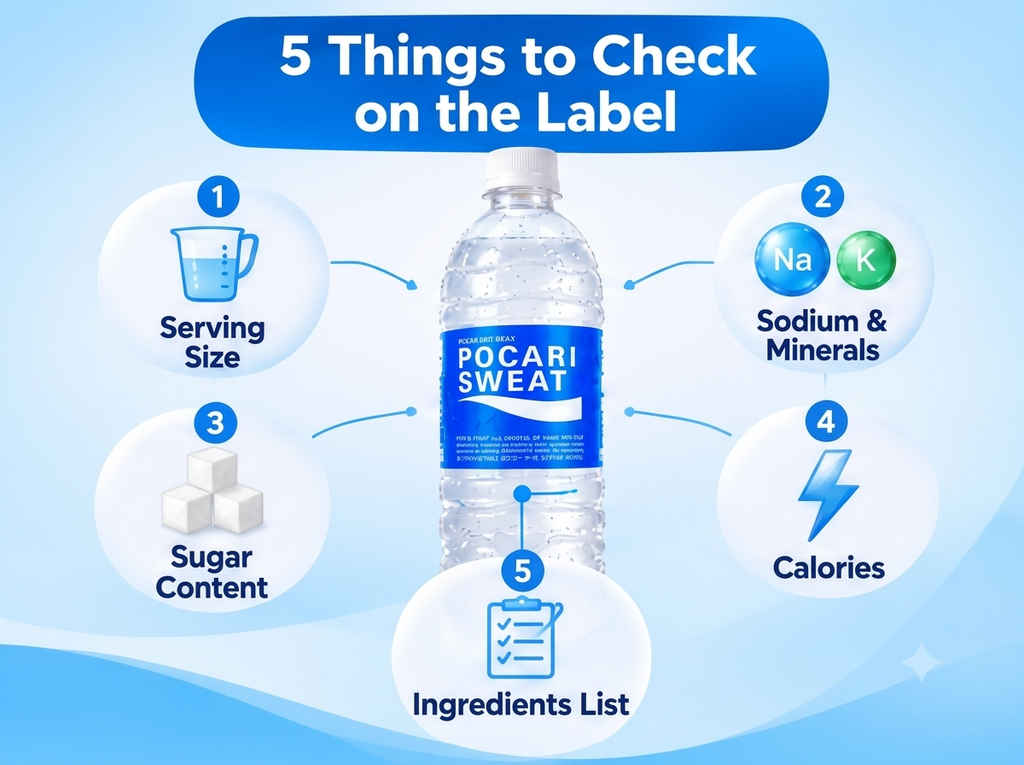
5 Essential Things to Check on an ION Supply Drink Label
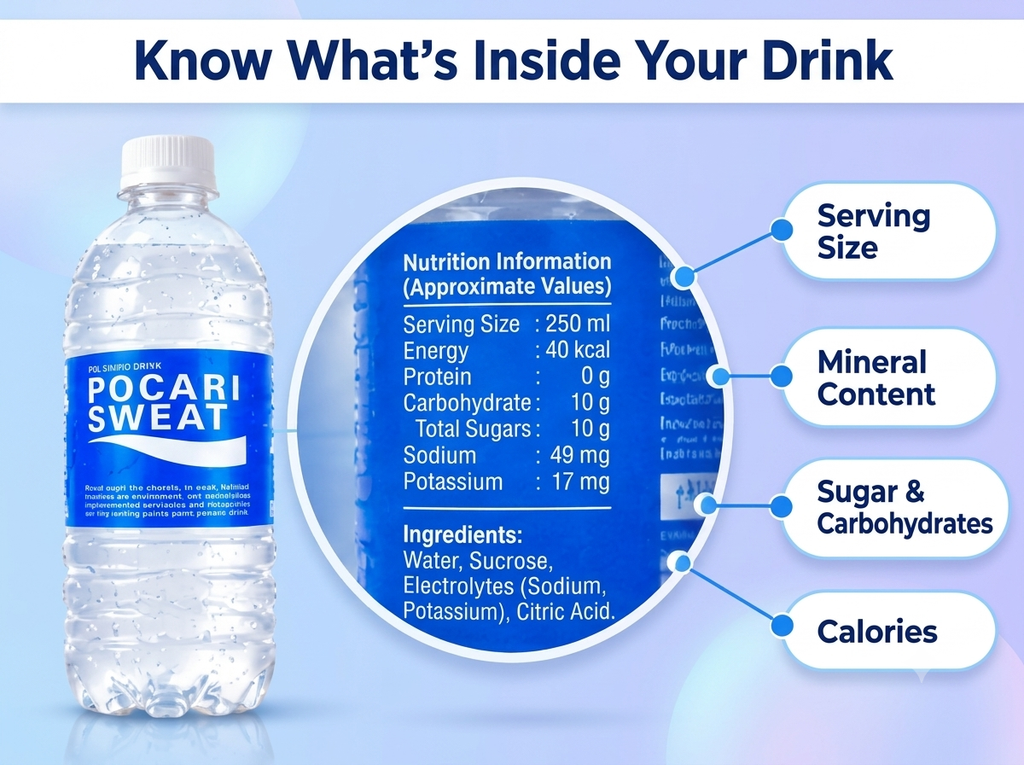
1. Serving Size and Bottle Volume
ION supply drink nutrition facts are often given per 100 ml and per serving. A 500 ml bottle may count as two servings, so the numbers on the front could be half of what you really drink. Look at both columns before you compare anything.
2. Sodium and Other Mineral Quantities
Find the sodium content in milligrams. Some labels show salt instead. As a rough rule, sodium is about 40% of salt, so multiply the salt figure by 0.4 to get an estimate. After that, check potassium, calcium and magnesium if they’re listed.
3. Sugar and Carbohydrate Content
Look for the line that says “of which sugars”. It shows the hydration drink sugar content per 100 ml. If the label lists added sugars as well, note that number too.
4. Calories Per Serving and Bottle
Calories are usually given per 100 ml. Multiply by the bottle size to see what you’ll actually take in. A drink with 25 kcal per 100 ml gives you 125 kcal in a 500 ml bottle.
5. Complete Ingredients and Product Claims
Read the full list of ingredients, not just the front of the pack. Words like “light” or “refreshing” are marketing. The ingredients list and the nutrition table are the facts.
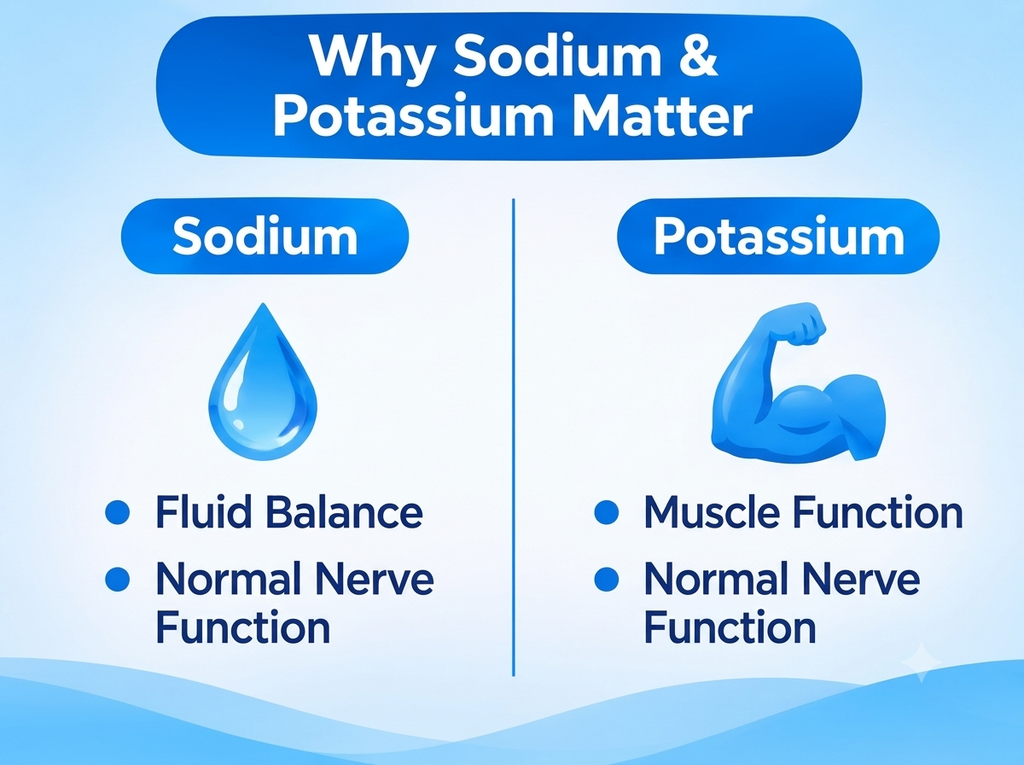
Why Do Sodium and Potassium Matter in ION Supply Drinks?
Sodium in ION supply drinks matters because it helps your body keep the water you drink and hold a steady fluid balance. You lose it in sweat, so it’s the mineral most often put back.
Potassium in hydration drinks supports normal muscle and nerve work, and the same is true of potassium in hydration beverages of any kind. Your body needs a good sodium potassium balance. Both leave the body in sweat, which is why you’ll see them side by side on most labels.
Mineral levels differ from product to product because brands make drinks for different uses. Your own needs change too, depending on your size, how much you sweat, the weather, your diet and your health. For good mineral replenishment, match the drink to the day. If you have a heart, kidney or blood pressure problem, or you eat a low-salt diet, ask your doctor before you pick one.
How Much Sugar Is in an ION Supply Drink?
First, know the difference between total sugars and added sugars. Total sugars include the sugar that’s already in an ingredient like fruit juice. Added sugars are the ones put in while the drink is made.
Many hydration beverages contain hydration drink carbohydrates for two reasons. They make the drink taste better, and they give a little energy. Glucose can also help the body take in sodium and water.
The amounts add up fast, so compare per 100 ml and per bottle. A drink with 6 g of sugar per 100 ml has 30 g in a 500 ml bottle. The same sum works for hydration drink calories. If you have diabetes, watch your weight or follow a set diet, check the ION supply drink sugar content closely and ask your doctor how it fits your plan.
How to Read Pocari Sweat’s Ingredients and Nutrition Label
Pocari Sweat is an ION supply drink made by Otsuka and first sold in Japan in 1980. The Pocari Sweat ion supply drink is made to put back the water and ions you lose in sweat. Here’s how to read its label:
- Ingredients: The list usually has sugar, salt, potassium chloride, calcium lactate, a magnesium salt, flavouring and vitamin C. Recipes can differ between countries, so read the Pocari Sweat ingredients on the Indian pack itself.
- Minerals: Look for sodium or salt first, then potassium, calcium and magnesium. This is the Pocari Sweat mineral content.
- Carbohydrates, sugars and calories: Read the Pocari Sweat nutrition facts per 100 ml, then multiply for the size of bottle you’re holding.
[Add per 100 ml values from the Indian pack here: energy, carbohydrates, sugars, sodium and potassium.]
Compare real numbers, not slogans. Put two labels side by side and check the same lines on each.
Common Mistakes to Avoid When Reading Hydration Drink Labels
Most nutrition label mistakes come from a few habits:
- Comparing different serving sizes: One label may say per 250 ml and another per 100 ml. Change them to the same amount first.
- Ignoring sugar: Minerals get the attention, but sugar changes the calories a lot.
- Thinking all hydration beverages are alike: Any ION supply drink comparison will show different amounts of sodium, potassium and sugar.
- Mixing up an ION supply drink with oral rehydration salts: ORS is a medical product with fixed amounts of minerals and glucose. It’s used to treat dehydration from illnesses such as diarrhoea. An ION supply drink isn’t a swap for it, so speak to a doctor or pharmacist if you’re unwell.
- Trusting marketing claims. Check the drink ingredients and the numbers instead.
Conclusion
Clear labels help you choose well. Before you buy any hydration drink, check serving size, sodium, potassium and sugar, then look at the calories for the whole bottle. Pick the ION supply drink that suits your needs, and if you’re not sure, ask your doctor.
FAQs
1. What is contained in an ION supply drink?
They mainly contain water, sodium, potassium and many will have a small amount of calcium and magnesium. Most will contain some sugar, flavouring and citric acid.
2. What information should I look out for on the label of an ION supply drink?
The serving size, sodium and other minerals, sugar, calories and ingredients. This should be given in 100ml and the whole bottle.
3. Why are sodium and potassium in ION supply drinks?
These are both lost in sweat. Sodium helps the body maintain fluid balance. Potassium helps normal muscle and nerve function.
4. Does it contain any sugar?
Most do. There will be a varying amount of sugar. The ‘of which sugars’ should be looked at per 100ml and then multiplied by the bottle size.
5. How can I compare the nutritional information between different hydration drinks?
This needs to be converted to the same measurement (e.g. 100ml). From here you can compare the sodium, potassium, sugar and calories directly.

How Long Does It Take to Rehydrate? 5 Facts | Pocari Sweat
November 19, 2026 · 12:55 pm[…] Not everyone sweats the same way. Your sweat mineral composition depends on your genes, your fitness, the weather and how well you’re used to the heat. Two friends doing the same workout can lose very different amounts of sodium loss during sweating. […]