5 Essential Workout Hydration Tips for Better Performance
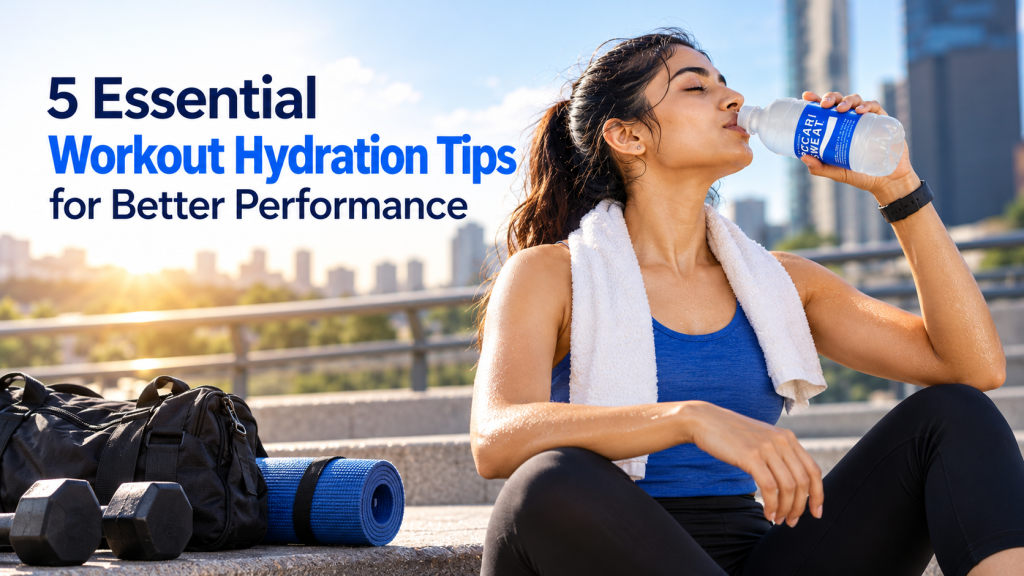
Most people only think about drinking once a session is underway and their mouth feels dry. By then you’re already catching up. Good workout hydration covers the whole routine: what you do before you start, while you move, and once you finish. Exercise makes you sweat, and sweat takes both water and electrolytes with it. That’s why many active people keep an ION supply drink like Pocari Sweat next to their water bottle. Here’s why hydration matters during exercise, five tips you can use straight away, and how to choose between water and an electrolyte drink.
Why Is Workout Hydration Important During Exercise?
On physical activity, the human body loses water in the form of sweat in order to cool itself. Sweat, however, is not simply water. It contains various electrolytes, such as sodium and potassium, which are excreted from the body alongside it. Fluids, then, have a particular role in relation to exercise.
They serve to cool the body and to replenish fluids lost as sweat during activity. As a result, an individual’s hydration habits during a workout impact their experience of the activity. The company’s own recommendations are straightforward: in order to maintain performance levels during physical exertion, one needs to drink sufficiently before feeling thirsty, as thirst indicates that the body has already lost fluid.
How much you need is determined by the type of workout:
•Intensity: The harder the workout, the more sweating it causes.
•Duration: The more prolonged it is, the more fluid volume is lost.
•Environmental factors: High temperature and humidity promote sweating.
That is why a single standard recommendation for fluid intake during physical activity cannot exist. A one-hour walk and a two-hour intensive gym session will have different requirements and impacts on your body.
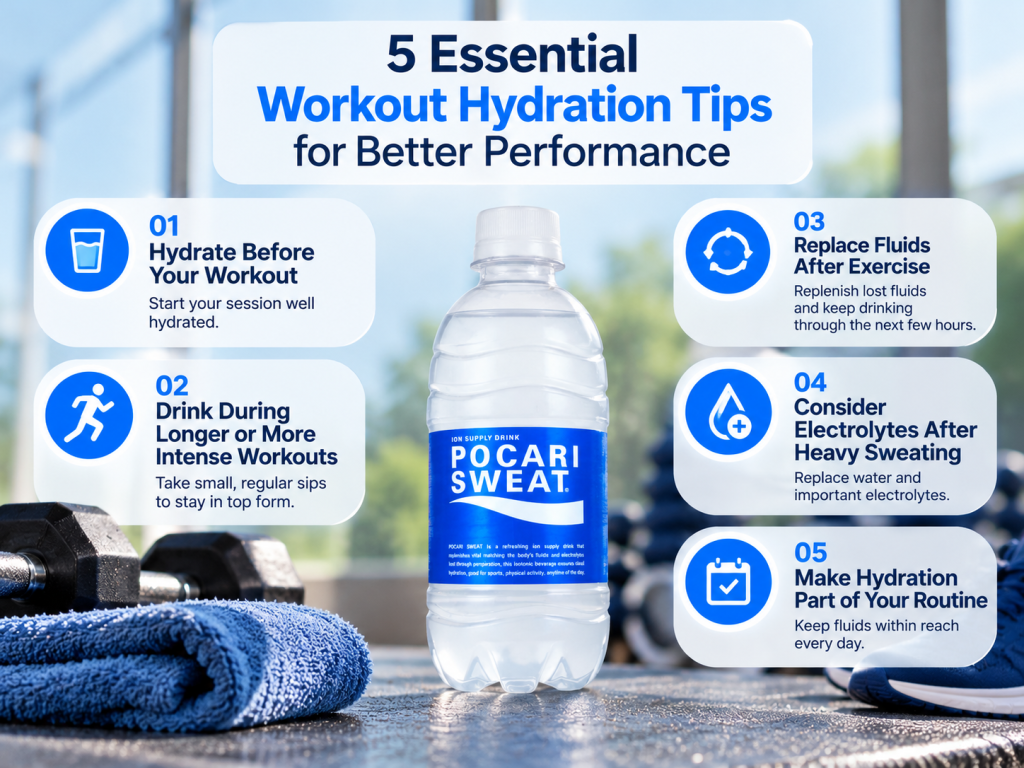
5 Essential Workout Hydration Tips
These workout hydration tips work best together. You don’t need to be perfect, just consistent.
Hydrate Before Your Workout
Staying properly hydrated is good before a workout so that you don’t have to rush to catch up while you are exercising. Hydration should be a part of your daily schedule. A glass of water or ION drink, about an hour before exercising is usually sufficient to maintain proper hydration. It’s better to sip a little before you start than chug a big glass and feel bloated during your workout.
Drink During Longer or More Intense Workouts
For short, easy sessions, you may need very little. As workouts get longer or harder, hydration during exercise matters more, because sweat loss keeps building. Pay attention to how much you’re sweating and what the weather is doing. A hot, humid room or a sunny afternoon run calls for more regular sips than a cool morning walk. Small, steady amounts work better than waiting for a break to drink a lot at once. If you run long distances, our guide to hydration during marathon training goes into more detail.
Replace Fluids After Exercise
Your workout ending doesn’t mean the fluid loss stops mattering. Hydration after exercise is about topping back up and carrying on drinking through the next few hours, not just one glass at the finish line. Pair it with a meal or snack when you can. For more on recovery, see our hydration tips for a smarter sports recovery drink.
Consider Electrolytes After Heavy Sweating
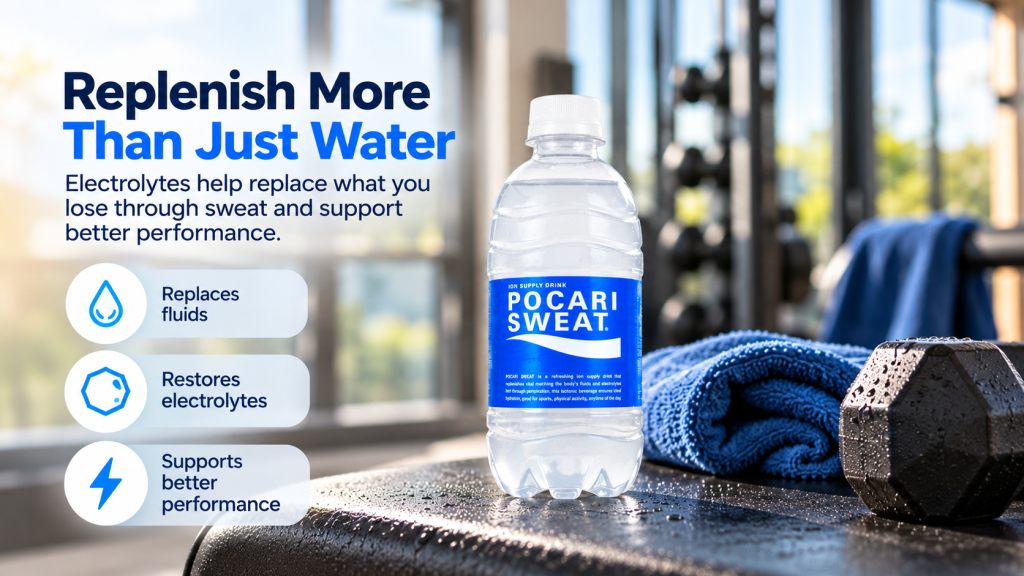
If you’ve sweated a lot, plain water only replaces part of what you lost. This is where electrolytes after workout sessions earn their place. An electrolyte-containing drink replaces water and minerals together.
Pocari Sweat is an isotonic drink, which means its concentration of salts and sugars sits close to that of your body’s own fluids. The small amount of glucose alongside sodium helps the body absorb water and ions. It’s a good fit after a long or sweaty session, and it complements water rather than replacing it.
Make Hydration Part of Your Routine
The easiest habit to keep is the one that needs no thinking. Keep fluids where you’ll see them:
- In your gym bag, packed the night before.
- On your desk, so you start sessions already hydrated.
- In the car or by the door, ready for when you finish.
Link drinking to things you already do, like a glass when you lace up your trainers and another when you get home. Our guide on how to prevent dehydration every day has more everyday habits to build on.
Workout Hydration: How Much Should You Drink During a Workout?
There’s no single number that suits everyone, and chasing one is not very helpful. A few things shape your needs:
- Exercise duration: More time moving means more fluid to replace.
- Exercise intensity: Hard efforts make you sweat more than gentle ones.
- Temperature and humidity: Hot, muggy conditions raise your sweat rate even at the same effort.
- Individual sweat rate: Some people simply sweat more than others, even doing the same session.
A better approach than a fixed target is to watch your own signals. Thirst, how you feel mid-session, and the colour of your urine afterwards all tell you something. Pale yellow is a good sign. Darker yellow means you need more fluid. If those signals start to look off, it’s worth reading up on the signs of dehydration so you can act early.
Water vs Electrolyte Drinks for Exercise Hydration
Water and electrolyte drinks do slightly different jobs, so the right choice depends on the session.
| When water may be suitable | When electrolytes may be useful | |
| Type of workout | Shorter, lighter sessions where you don’t sweat heavily | Long sessions, hard efforts, or exercise in the heat |
| What you lose | Mostly fluid | Minerals as well as fluid |
| What it does | Simple, and usually enough for light activity. It stays your default for most of the day too | Replaces water and minerals together, which plain water doesn’t |
| Example | A gentle yoga class on a cool morning | A long session in a warm gym or after heavy sweating |
How to choose: Look at the conditions and match the drink to how hard and how long you’re working and how much you sweat. Our piece on ION drinks that truly replenish your body explains how electrolyte drinks work, and the top 5 isotonic drinks to replenish your body right helps you compare options. If you want a closer look at the difference, our ion water benefits guide covers it.
Final Thoughts on Workout Hydration
Staying well hydrated during a workout is a continuous process that requires sipping on fluids, not just a one-time drink. Being well hydrated before, during long or intense workouts, and after exercising, plus keeping some fluids nearby, are the best ways to ensure proper hydration during physical activity. Water is usually enough for light exercises, but if the workout was particularly strenuous, it might be a good idea to have an electrolyte sports drink (like Pocari Sweat) to replace both water and minerals lost during the activity. Keeping track of how much one sweats, the outside temperature, and personal comfort are all useful indicators for adjusting one’s hydration plan.
FAQs
How much water should I drink before a workout?
There is no standard answer, depending on many factors, such as size, the weather, and how sweaty you get. One or two glasses of water or ION drinks about an hour before exercising is a good idea. You shouldn’t drink too much, but rather gradually, in the hour before a workout.
Should I drink water during a workout?
It is a good idea to drink water during prolonged, intense exercise or if it is hot and humid outside. If you work out for a long time, it is better to sip water than to wait until you are thirsty.
What should I drink after a workout?
It is advisable to drink water after a workout. Sports drinks, on the other hand, may be necessary if you sweat significantly during your workout. They contain minerals that your body loses when you sweat. In addition, to restore the reserve of sugars consumed during exercise, it is important to eat after a workout.
Do I need to replenish electrolytes after a workout?
After a workout, to replace the lost fluids, you need to drink water. However, if you have engaged in a prolonged, sweaty activity, electrolytes will help you get rid of excess salt.
Is water enough for workouts, or do I need something else?
To stay hydrated during a workout, you need to drink water. However, if you work out intensely and for a long time, sports drinks are also beneficial to you because they contain electrolytes.
Follow us on Instagram for hydration tips, wellness insights, product updates & more.