
Marathon training asks more of your body than most people plan for, and hydration is usually the bit that gets sorted last, if it gets sorted at all. Long runs pull way more fluid and minerals out of you than an ordinary day does, often without much warning until you’re already struggling, which is exactly why a lot of runners keep something like Pocari Sweat in their kit alongside plain water. A few solid hydration tips, applied consistently, go a long way here. That’s really what hydration during marathon training comes down to: sorting it out early, well before race day, so it doesn’t become the reason you hit a wall you didn’t see coming.
Why Hydration Matters During Marathon Training
Sweat isn’t just water leaving your body. Sodium and other minerals go with it, and the longer you’re out there, the more that adds up. A 30-minute run and a three-hour long run just aren’t the same ask, not even close.
Weather matters more than most runners give it credit for. Heat and humidity push your sweat rate up no matter your pace, so a route that felt fine last month can hit completely differently on a warmer day. It’s worth reading up on the signs of dehydration so you can catch it before it affects your run. And everyone’s different here too, body size, natural sweat rate, how well-trained you are, it all shifts the picture. There’s no single number that works for every runner.

7 Marathon Hydration Tips Every Runner Should Know
1. Start Your Long Runs Hydrated
Showing up already behind means you’re fixing a deficit while also running. Drink steadily in the hours before a long run instead of all at once right beforehand, so your body has time to actually use it.
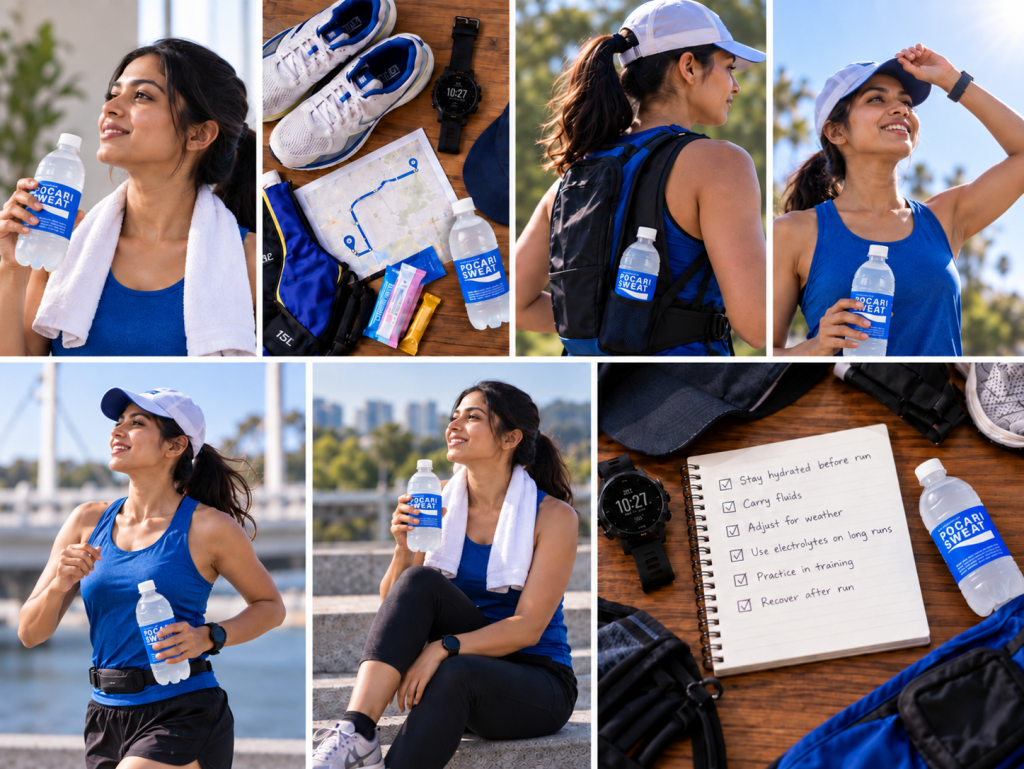
2. Practice Your Hydration Strategy During Training
Race day is the wrong time to try something new. Whatever you plan to drink, and how often, work it out on your long runs first so it’s second nature by the time it counts.
3. Adjust Fluids for Weather and Sweat Loss
A cool morning run and a muggy afternoon session don’t call for the same plan. Pay attention to how much you’re actually sweating, not just what a chart says you should drink. Our 7 simple ways to stay hydrated in summer heat has more on training through hot conditions.
4. Consider Electrolytes During Longer Runs
Past roughly 60 to 90 minutes, plain water starts falling short of what you’re actually losing. This is where electrolyte hydration for runners earns its place. Sodium and potassium need replacing alongside fluid, not instead of it.
5. Don’t Wait Until You Feel Severely Thirsty
Thirst shows up after you’re already behind. Using it as your cue means reacting to a deficit instead of staying ahead of one, which is a bit late in a three-hour effort.
6. Rehydrate After Long Runs
The run ending doesn’t mean fluid loss stops mattering. Whatever sweat took out over those miles still needs replacing, and recovery hydration gets skipped more than it should. A drink like Pocari Sweat covers fluid and electrolytes together, which water on its own doesn’t manage.
7. Avoid Trying Something New on Race Day
New gel, new drink, new timing, save it for training. Race day should run on whatever you’ve already tested and trust, not something you’re trying for the first time with a crowd watching.
How Much Should You Drink During Marathon Training?
There isn’t one number that fits every runner, and chasing one wastes energy better spent elsewhere. A few things actually shape it.
Sweat rate varies a lot; some runners lose noticeably more fluid than others at the exact same pace and distance. Pace matters too; faster efforts generate more heat, which means more sweat. Duration is the obvious one; more time out there means more time losing fluid. Weather pushes needs up regardless of how hard you’re working; heat and humidity don’t care about your training plan. And tolerance is personal; some runners handle more fluid mid-run comfortably, others need smaller, more frequent sips. Both are fine. It comes down to what your body actually tolerates, not what worked for someone else.
Water vs Electrolyte Drinks for Marathon Training
Water and electrolyte drinks aren’t really competing for the same job. Water replaces fluid. Electrolyte drinks replace fluid, and the minerals sweat takes with it.
Water works fine for shorter training runs, easy efforts, anything under about an hour where sweat loss stays fairly light. Electrolyte drinks become useful once you’re running longer, sweating heavily, or training in heat, which is really the core of good marathon training hydration: matching the drink to what the session is actually asking of you. Our top 5 isotonic drinks to replenish your body right is worth a look when comparing options.
Testing this during training matters more than people expect. What settles fine in someone else’s stomach might not settle in yours, and finding that out mid-marathon is a genuinely bad time to learn it.
How to Practice Hydration on Long Runs
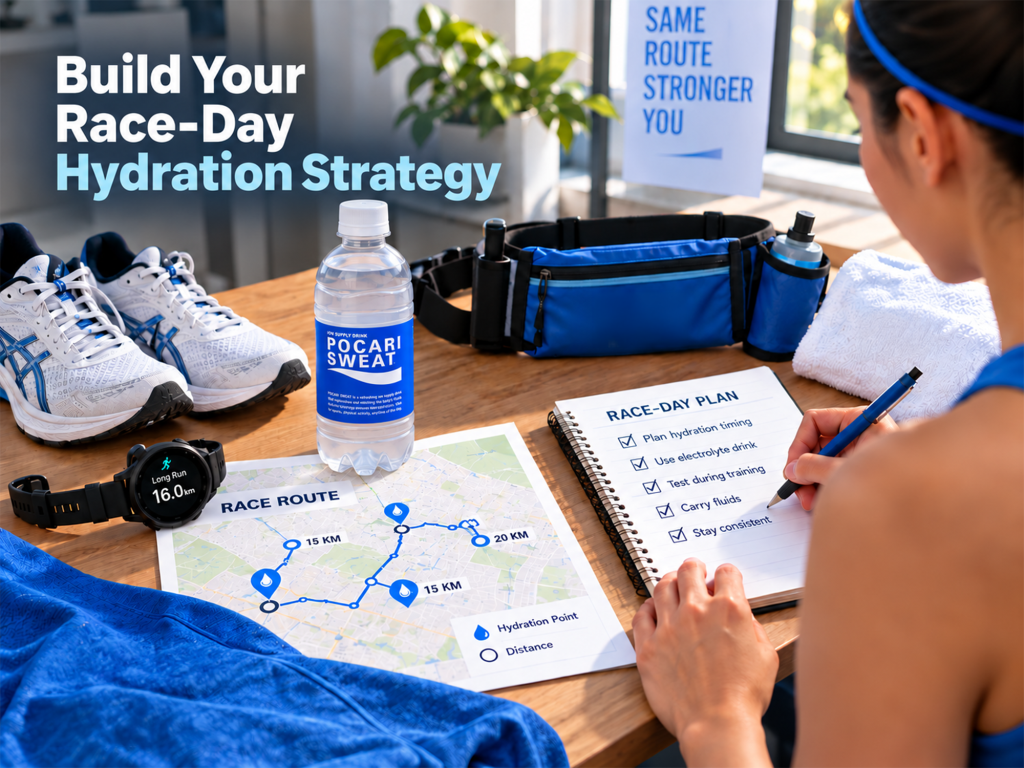
Plan your hydration stops; know roughly where you’ll drink before you start rather than deciding on the fly. Carry fluids that suit your distance, a handheld bottle or a vest, so you’re not relying on access you can’t control. Test different timings across a few long runs and pay attention to what actually feels manageable. Track how your body responds too; energy levels, stomach comfort, and how you feel in the final few miles all tell you something. Once something works consistently, that’s your plan. Stop tweaking it once it’s dialled in; more fiddling from there usually just adds risk.
Common Marathon Hydration Mistakes
Drinking too little: Under-hydrating quietly wears down performance well before you notice it happening.
Drinking excessively: More isn’t automatically better, overdoing fluid intake brings its own problems, especially without enough electrolytes alongside it.
Ignoring electrolytes when appropriate: Especially on longer runs or hot days, skipping electrolytes leaves half the job undone. Our hydration tips for a smarter sports recovery drink covers this in more depth.
Not practising with race-day products: Whatever you plan to drink on race day should already be familiar to your stomach by then, not a surprise.
Ignoring weather: Running the same plan regardless of conditions is one of the more common gaps in an otherwise solid routine.
Final Thoughts on Marathon Hydration
Hydration during marathon training deserves the same attention as your mileage or your pace work. It isn’t a side detail you sort out later. Test your approach during training, adjust for weather and effort, and keep electrolyte hydration for runners in the mix once your long runs stretch past an hour. Get this right well before race day, and hydration stops being something you’re gambling on when it actually matters.
Marathon Hydration FAQs
How often should runners drink during a marathon?
Roughly every 15 to 20 minutes for most runners, though this shifts with pace, sweat rate, and weather. Whatever interval you settle on, test it in training first.
Should you drink water or electrolytes during a marathon?
Water usually covers the earlier, shorter stretches. Past about an hour, or once you’re sweating heavily, electrolytes start to matter more, not instead of water but alongside it.
How do you hydrate for a long run?
Start hydrated in the hours beforehand, sip steadily during the run instead of waiting until you’re thirsty, and bring electrolytes in once the distance or heat calls for it.
What should you drink after a long run?
Something that replaces fluid and electrolytes together works better than water alone, especially after heavy sweating. Pairing it with a proper meal helps too; check our guide on dehydration symptoms if you want to know what under-recovery looks like.
Follow us on Instagram for hydration tips, wellness insights, product updates & more.