How to Stay Hydrated All Day: Simple Expert Tips
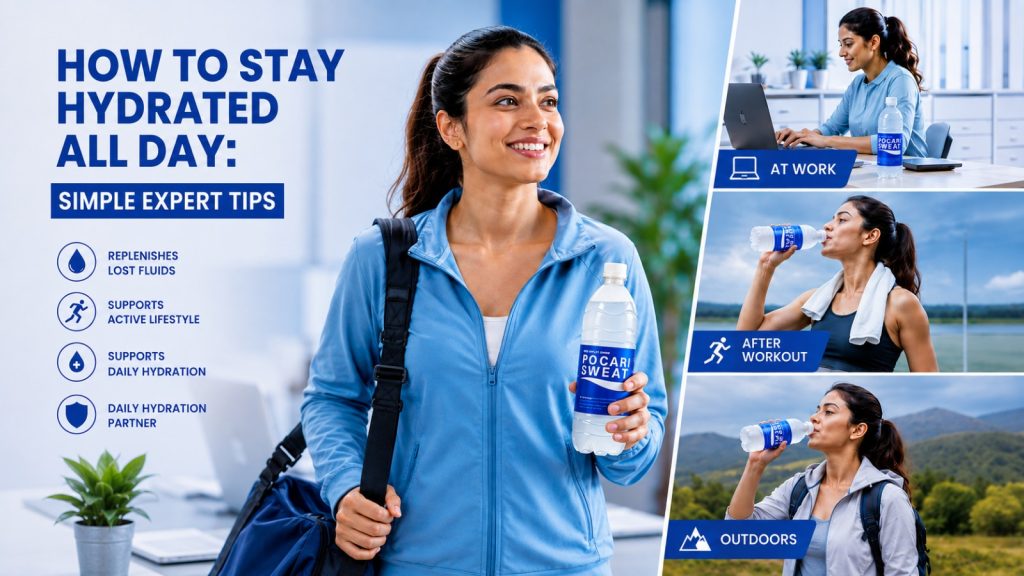
Most people know they should drink more water. Fewer actually know how to stay hydrated in a way that holds up through a whole day, not just a morning glass that gets forgotten by lunch. Hydration shapes more than thirst. It affects how clear-headed you feel, your focus, and even how well your muscles and joints hold up, and the gap between “fine” and genuinely well-hydrated is bigger than most people assume.
Here’s the part that catches people off guard: water alone doesn’t always cover it. Body hydration depends on minerals just as much as fluid, and on certain days, hot ones, active ones, and unwell ones, drinking water by itself can’t always keep pace with what your body’s actually losing.
Why Staying Hydrated Matters
Hydration isn’t really a wellness trend. It’s closer to basic maintenance. Digestion, circulation, temperature regulation, and joint cushioning all lean on having enough fluid on hand, and the effects of falling short can show up sooner than people expect.
Even mild dehydration can leave you feeling foggy, sluggish, and a little short-tempered before you connect it to how little you’ve actually had to drink. Headaches, dry skin, and constipation often tag along too, sometimes written off as unrelated when a simple glass of water could have been part of the answer.
Some people benefit from keeping a closer eye on this than others. Anyone active regularly, works outdoors, travels a lot, or lives somewhere hot and humid tends to go through fluid faster than an average desk-bound day would account for. Older adults deserve a mention too, since thirst signalling tends to weaken with age, meaning the body can be running low without sending much of a warning at all.
How Much Water Should You Drink Every Day?
How Much Water Should I Drink doesn’t really have one clean answer, no matter how much people want it to. The old “eight glasses a day” rule is easy to remember, sure, but it was never based on much solid science. Most health bodies now lean towards a broader range, roughly 2.7 litres a day for women and 3.7 litres for men, counting fluid from food as well as drinks. Your real number still depends on body size, activity level, and climate.
How much water should I drink every day if you’re active or somewhere hot? More than that baseline, often noticeably more. Sweat, humidity, and higher body temperature all push your needs up past what a standard number accounts for.
Drinking water covers most of an ordinary day just fine on its own. But there are moments it isn’t quite enough: after heavy sweating, during a bout of illness involving vomiting or diarrhea, or across a long stretch of physical activity where sodium is leaving alongside the fluid. That’s when your body needs a bit more than plain water to actually catch up.
Simple Expert Tips to Stay Hydrated All Day
Knowing how to stay hydrated has less to do with drinking huge amounts and more to do with spreading intake sensibly across the day. A handful of habits genuinely make a difference.
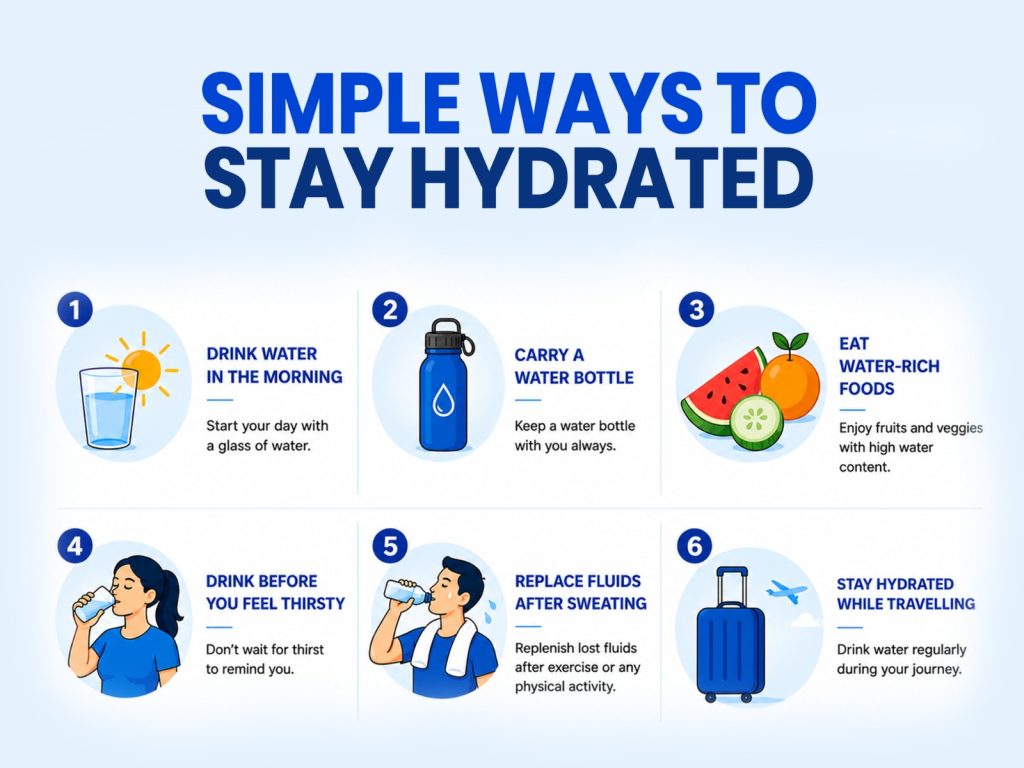
Start your day with water: You go hours overnight without any fluid, so a glass first thing gets you starting the day from a reasonable baseline instead of being already behind.
Carry a reusable water bottle: It sounds almost too obvious to mention, but visibility really does change behaviour. A bottle sitting in view gets used far more than water that requires a trip to find.
Eat water-rich foods: Cucumber, watermelon, oranges, and leafy greens all add meaningfully to your fluid intake while bringing real nutrients along, and they’re an easy way to top up without constantly reaching for a glass.
Stay hydrated before you feel thirsty: Thirst shows up after your body’s already running a deficit, not before. Wait for it as your cue, and you’re perpetually a step behind rather than ahead.
Replace fluids after sweating: Heavy sweating carries sodium and potassium out along with the water, so prevent dehydration properly by replacing both, not just refilling the water side. Real dehydration prevention treats fluid and ions as a pair, not a choice between one or the other.
Stay hydrated while travelling: Flights dry you out quickly thanks to low cabin humidity, and a disrupted routine makes it easy to simply forget to drink. Packing travel hydration drinks or sachets means you’re covered without hunting for the right thing at an airport kiosk mid-journey.
Staying Hydrated During Summer and Hot Weather
Heat changes the maths considerably. Summer hydration needs to account for sweat you don’t always notice, since higher temperatures push fluid loss up even when you’re barely moving, let alone exercising.
Summer dehydration creeps up quietly for exactly this reason. You might not feel obviously sweaty in a hot office or car, but your body’s losing fluid steadily in the background regardless. Staying ahead of it, rather than reacting once you’re already thirsty, is really the whole strategy here.
To stay hydrated in summer, build fluid intake into your routine instead of treating it as an afterthought: a bottle by your desk, a reminder on your phone, or a drink before heading outdoors rather than after. Summer drinks with a genuine mineral profile can do more of the work than plain water alone, particularly on the toughest days.
Heat protection goes beyond hydration too, though it starts there: shade, breathable clothing, and timing outdoor activity to dodge peak heat all matter alongside what you’re actually drinking. For real hot weather hydration, especially during a proper heatwave hydration Drink situation: something built around ion balance tends to support your body more directly than water on its own, since it replaces what you’re actually losing rather than just topping up volume.
Outdoor hydration during summer sport or manual work deserves particular attention, since exertion and heat compound each other quickly. As part of broader summer wellness, keeping an eye on your summer water intake and nudging it upward as temperatures climb is one of the simplest things you can do to make a hot afternoon more comfortable.
Water vs Ion Drinks: Which One Should You Choose?
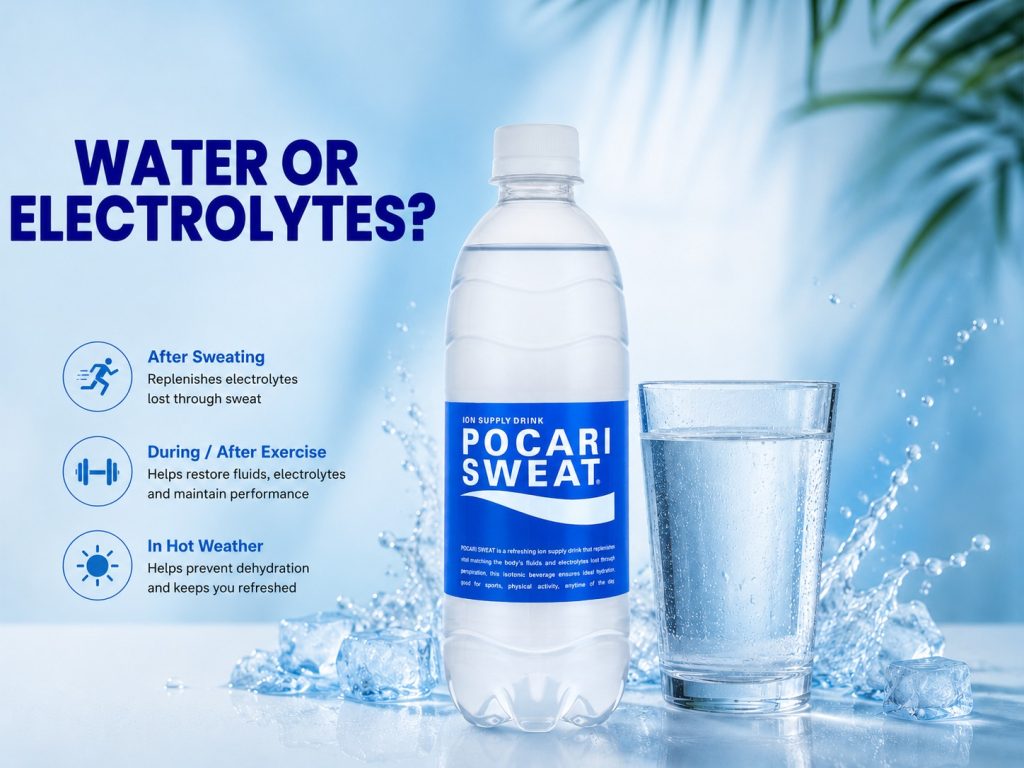
The water vs electrolyte drinks question, or, in Pocari Sweat’s language, water vs ion drinks, comes up constantly, and honestly, the answer depends on what your body’s actually dealing with at the time.
Water covers most of an ordinary day just fine: desk work, errands, light activity in mild weather. You’re not losing much beyond what a normal drinking routine already replaces.
Ion drinks earn their place once fluid loss picks up past that, after a longer stretch of activity, during a heatwave, through illness, or across a long travel day. In this electrolyte drinks vs water comparison, or ion drinks vs water, as we’d put it, it’s not really about which one’s “better” overall; it’s about which one matches what your body needs in that specific moment. You can read more about how mineral balance actually works on Pocari Sweat’s science page, which walks through the formulation thinking behind why mineral-matched drinks are absorbed differently to water alone.
Choosing between them really comes down to matching the drink to the situation: water for routine days, a proper ion drink for anything pushing your body past its usual fluid loss. The Pocari Sweat India range is built specifically around that second scenario, and it’s worth a look at Pocari Sweat’s background in hydration science if you’re curious why the formulation leans on balance rather than sweetness.
Final Thoughts on How to Stay Hydrated
Staying hydrated isn’t complicated, but it does take a touch more intention than most people give it. Start the day with water, keep a bottle within reach, eat foods with real water content in them, and don’t wait for thirst to tell you what your body already knows. On hot days or after heavy sweating, lean on ions rather than water alone, since that’s when the mineral side of things actually starts to matter. Get the basics right consistently, and steady, comfortable hydration becomes far less of a daily thought. For more everyday hydration guidance, Don’t Sweat It is worth a browse.
FAQs
How can I stay hydrated throughout the day?
Start with water in the morning, carry a bottle so drinking stays visible and easy, eat water-rich foods, and drink before you feel thirsty rather than after.
How much water should I drink every day?
Roughly 2.7 litres for women and 3.7 litres for men is a common baseline, though your actual needs shift with activity level, body size, and climate.
Are ion drinks better than plain water?
Not universally, but they’re more useful after heavy sweating, during illness, or in hot weather, since they replace lost minerals alongside fluid, something water alone doesn’t do on its own.
How do I stay hydrated during hot weather?
Drink steadily rather than waiting until you’re thirsty; reach for an ion drink to cover mineral loss, and pair it with shade and breathable clothing when you’re outdoors.
What are the signs that I’m not drinking enough water?
Thirst, dark urine, tiredness, headaches, and dry skin are common early signs. Catch these early, and it’s easier to correct course before dehydration properly sets in.