
Hydration During Travel: 7 Essential Tips for Comfort

Hydration during travel is easy to forget. With queues, platform changes and odd timetables, most of us drink much less than we do at home. On a long trip, dry air, warm carriages and little access to water can leave you tired, achy and short-tempered. This guide covers flight hydration, train journey hydration and a few easy habits for staying hydrated while travelling.
Why Is Hydration During Travel Important on Long Journeys?
Your body loses water all day through breathing, sweat and urine. At home, you top it up without thinking. On a long journey, that habit slips. You might skip drinks to avoid toilet breaks, or you just forget. Low fluid intake builds up slowly, and you usually notice it only when you start to feel unwell.
A few things make long-distance travel hydration harder:
- Dry cabin air: Plane cabins have very low humidity, so you lose more water through your skin and breath. This is a big part of travel dehydration.
- Warm, crowded spaces: Stuffy coaches and busy platforms make you sweat more than you think.
- Changed routines: Meals at odd times and fewer drinks make it hard to keep your usual fluid balance.
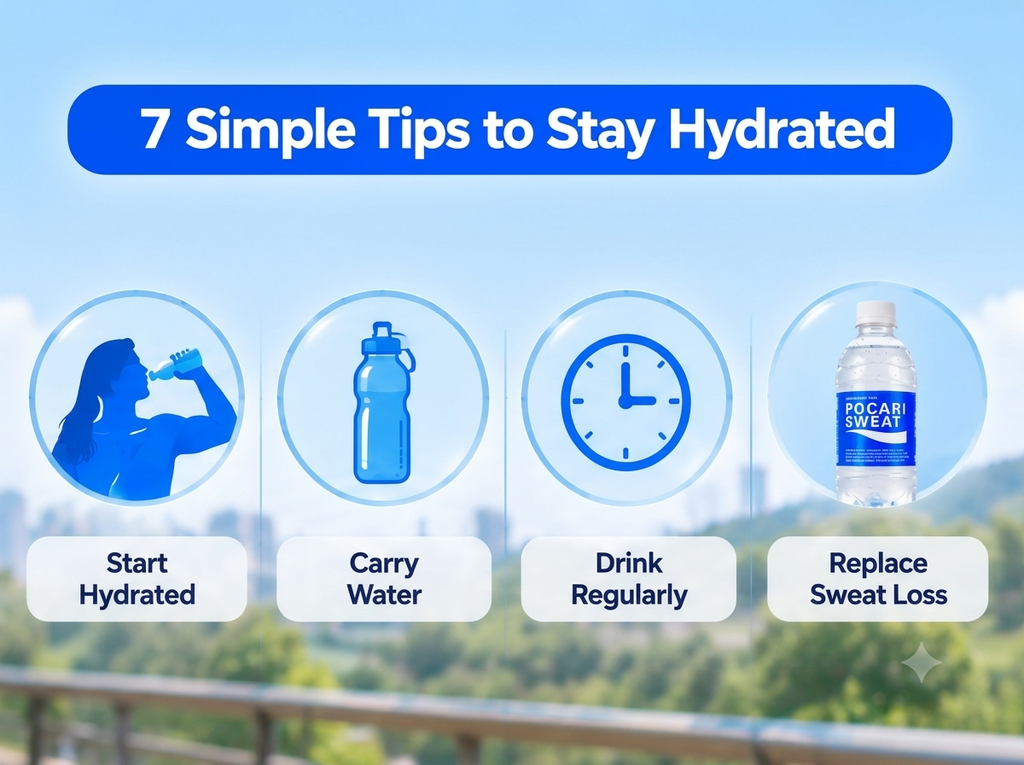
7 Essential Tips for Hydration During Travel
1. Start Your Journey Properly Hydrated
Staying hydrated while travelling starts before you leave home. Drink water slowly through the morning instead of gulping a lot just before you set off. If your trip runs late, you will have a head start.
2. Carry a Refillable Water Bottle
This is the easiest of all travel hydration tips. Empty the bottle before airport security, then fill it again once you are through. Most airports and stations have free water points.
3. Drink Fluids Regularly During Your Journey
Fluid intake during travel works best in small, steady amounts. A good guide is one glass of water, about 200 to 250 ml, every hour. Set a reminder on your phone if you tend to forget. By the time you feel thirsty, you have already lost a fair bit of water.
4. Add water rich foods and snacks
Food can help increase how much fluid you’re taking. Cucumbers, oranges, watermelons and grapes are all high in water and easy to add to your bag. Try to avoid salty and fried food as they can make you feel thirsty.
5. Take care with alcohol and caffeine
Tea, coffee and alcoholic drinks can cause you to pee more which isn’t great for keeping hydrated. However, you don’t necessarily need to avoid them. Just have a glass of water with every drink and try not to have too much alcohol on flights.
6. Drink more if it’s hot or you’re active
If you’re on a hot train without aircon, doing lots of sightseeing or walking with heavy bags you’ll be sweating more. Have more fluids and start drinking earlier. Even if it is cool outside you will still be losing water so try to keep sipping.
7. Consider an ION Supply Drink After Significant Sweating
Sweat carries water and minerals such as sodium and potassium, also called ions. After heavy sweating, plain water replaces the water but not the minerals. An ION supply drink gives you both, which makes it a useful form of fluid replacement after a hot, tiring stretch. It is one of the more practical hydration drinks for travel when conditions are harsh.
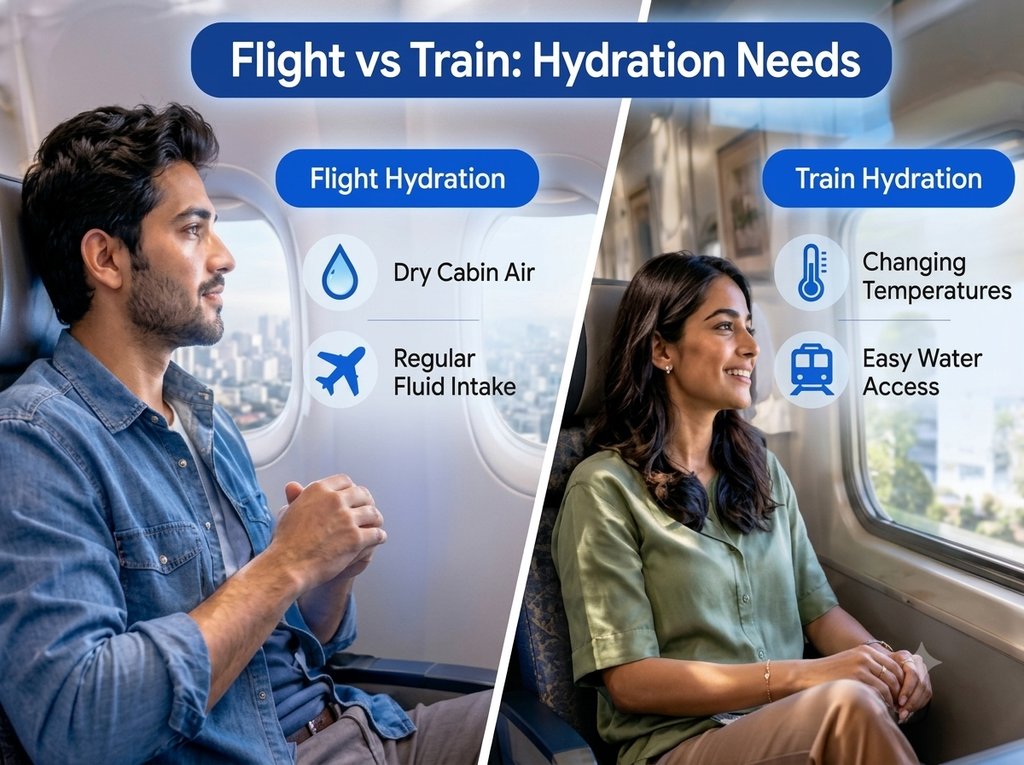
Flight Hydration vs Train Journey Hydration
The two journeys are different, so your habits should be too.
Flight hydration: Cabin air is dry, so dehydration during flights comes mostly from steady water loss through your breath and skin. You may not feel sweaty, so it’s easy to underestimate how much you’re losing. Sip water often, say yes when the crew offers it, and don’t pass the time with alcohol or lots of coffee.
Train journey hydration: Conditions change a lot from one train to the next. An air-conditioned coach may feel fine, while a packed, warm compartment can make you sweat heavily. Train travel hydration also depends on access, because trolleys come and go and stops are short. Carry enough water for the whole trip and top up at stations. On overnight trains, keep a bottle within reach.
What Are the Signs of Dehydration During Travel?
Spotting the signs of dehydration early helps you fix the problem before it grows. Common dehydration symptoms while travelling include:
- Thirst and a dry mouth, which are often the first signs.
- Dark urine or passing less than usual. Pale yellow is what you want.
- Headaches and tiredness. Travel fatigue has many causes, but low fluid levels can make it worse.
- Dizziness or feeling lightheaded, especially when you stand up.
Mild symptoms usually ease with water, rest and a cooler spot. Get medical help if you feel confused or faint, have a racing heartbeat, can’t keep fluids down, or haven’t passed urine for many hours. Children, older adults and people with health problems need extra care.
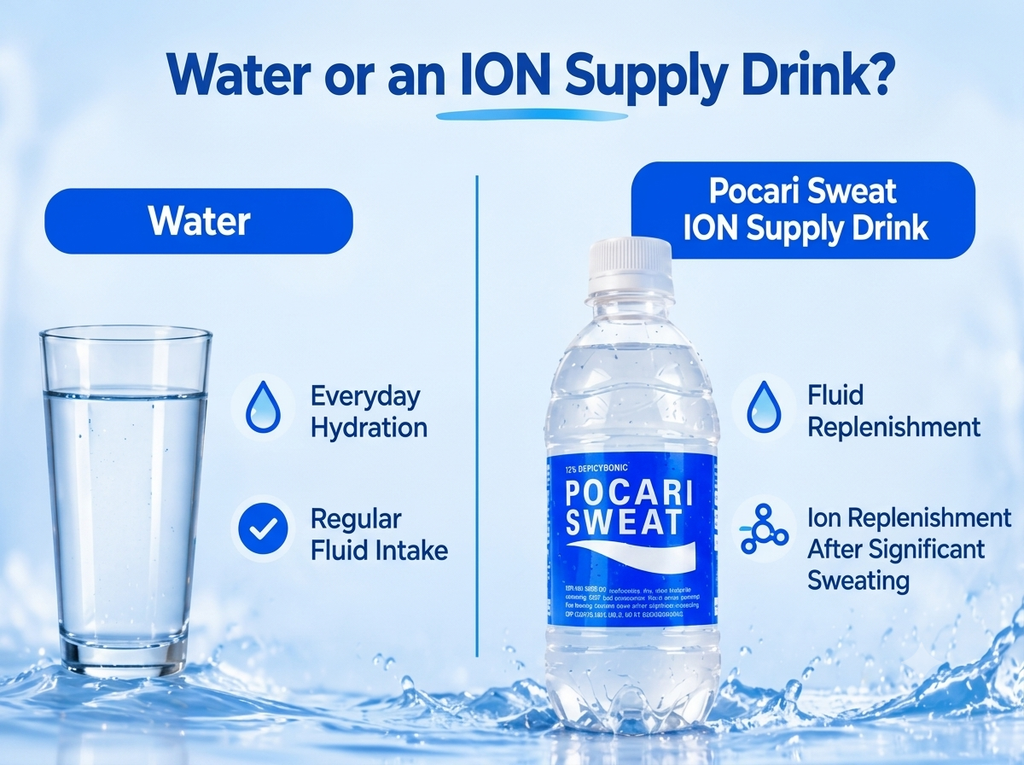
Water vs ION Supply Drinks: What Should Travellers Choose?
Water should be your main drink. It has no sugar, it’s cheap and you can find it almost anywhere. In normal conditions, water is enough.
Things change after heavy sweating, and this is where the water vs ION supply drink question matters. Heavy sweating removes minerals as well as fluid, so you may want to put back both. An ION supply drink such as Pocari Sweat is made with a balance of ions meant to be close to the body’s natural fluids. That makes Pocari Sweat for travel a handy choice on hot days, on long walks between connections or after a draining leg of your trip. It is also a good ION supply drink for travel when you can’t easily get anything else.
When you pick hydration beverages, keep these points in mind:
- How much you sweat: If you sweat only a little, water will do.
- Sugar: Most ION supply drinks contain some sugar, so read the label and drink them alongside water.
- Your health: If you have a medical condition or a restricted diet, ask your doctor first.
Conclusion
Good hydration during travel comes down to a few small habits: drink before you leave, carry a bottle, sip on a schedule and drink more when it’s hot or you’re active. Planes and trains have different problems, but the goal is the same, which is to keep your fluids steady and arrive feeling well. Pick drinks that suit you and the conditions, and plan them as carefully as your tickets.
FAQ
1. What can I do to stay well hydrated when on a long journey?
Drink plenty before you set off. Bring a re-usable bottle and aim to have a glass per hour. Try to eat foods that have high water content and limit alcohol and caffeine intake. In the heat you will need to drink more.
2. Will flying cause dehydration?
In a plane the air is very dry which means you will lose more water than usual. Many people also don’t drink as much whilst on the plane which can cause dehydration.
3. How much should I be drinking on a long flight?
A good rule is to aim for 200-250ml per hour. This depends on your body size, health and how much you are sweating so if you feel thirsty or your urine is dark increase your intake.
4. When would I benefit from having an ION supply drink?
This will be most beneficial after you have sweated a lot, whether it be in the heat or after a long walk. It provides hydration and ions however should not be used instead of just water.
5. What are the initial signs of dehydration whilst travelling?
You may feel thirsty, have a dry mouth, dark urine, headaches, tiredness and feel lightheaded. Try to drink fluids and rest. If you are experiencing severe symptoms then seek medical advice.