Simple Ways to Know How Much Water You Should Drink

There’s no magic number that everyone should use as a reference point, no matter how much it is repeated as such in various sources. Working out how much water to drink a day really depends on your individual situation and on whether plain water is enough or a drink like Pocari Sweat belongs in the mix too. Determining your specific hydration needs is more useful than trying to determine anyone else’s.
How Much Water Should You Drink Every Day?
Basic advice is that you want to aim for somewhere in the region of eight glasses, or about two litres, of water a day. This recommended water intake figure is a good baseline value, nothing more. Your everyday water needs could be considerably higher than suggested by it depending on your body, lifestyle, and the environment you live in.
It is also worth noting that not all liquids you consume count as water. Drinks like tea, soups, fruit, and even milk all contribute to your total water intake. The numbers quoted for a healthy water intake, or your daily water intake more broadly, are generally talking about total fluid intake, not excluding other liquids.
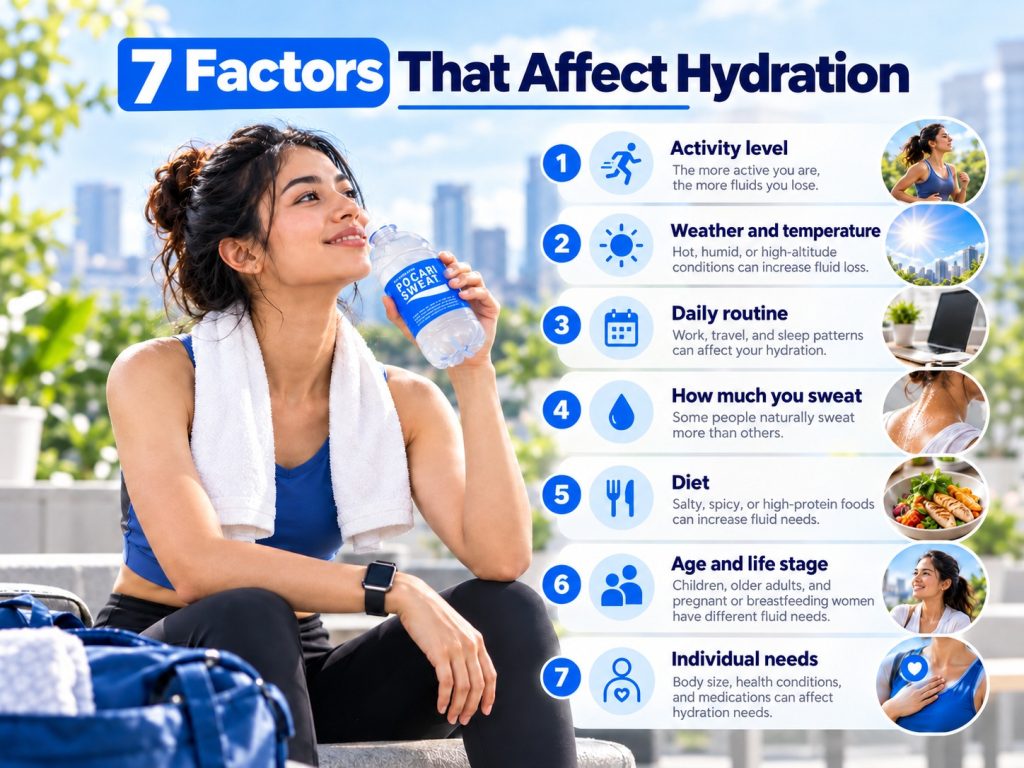
7 Factors That Affect How Much Water You Need
Your Activity Level
More movement means more sweating and therefore more loss of fluids through that process that must be replaced. Sitting down at a desk and working out are very different asks of your body.
The Weather and Temperature
Hot, humid conditions promote sweating even more than normal, and you may find yourself losing more fluids than you would normally at the same level of activity. Cold weather can also reduce your urge to drink fluids, even when you need them.
Your Daily Routine
Your regular activities, like sitting down on the way to work, going on a car trip with the family, or even sunbathing, all slowly deplete your fluids. When your schedule requires more from you, it can be an additional reason that you aren’t able to take in as much as you need.
How Much You Sweat
Some people sweat more than others, and this can be quite a large factor. The more you do, the more you will sweat, and the more prolonged the activity is, the greater your needs will be beyond this baseline of individual variation.
Your Diet
As much as your sweating patterns affect your needs, so too does your diet. Foods like fruits and vegetables with a high water content, like cucumbers, watermelon, and oranges, can contribute significantly to your needs without you realizing it.
Your Age and Life Stage
Children usually need more fluids, relative to their bodies, than adults do, while older people may be less aware of their needs. Needs also fluctuate during pregnancy or lactation.
Your Health and Individual Needs
Variations in health and other individual needs mean that some people will always require more specific measures to determine their needs. In these situations, it is better to refer to a medical professional rather than attempting to use general rules of thumb.
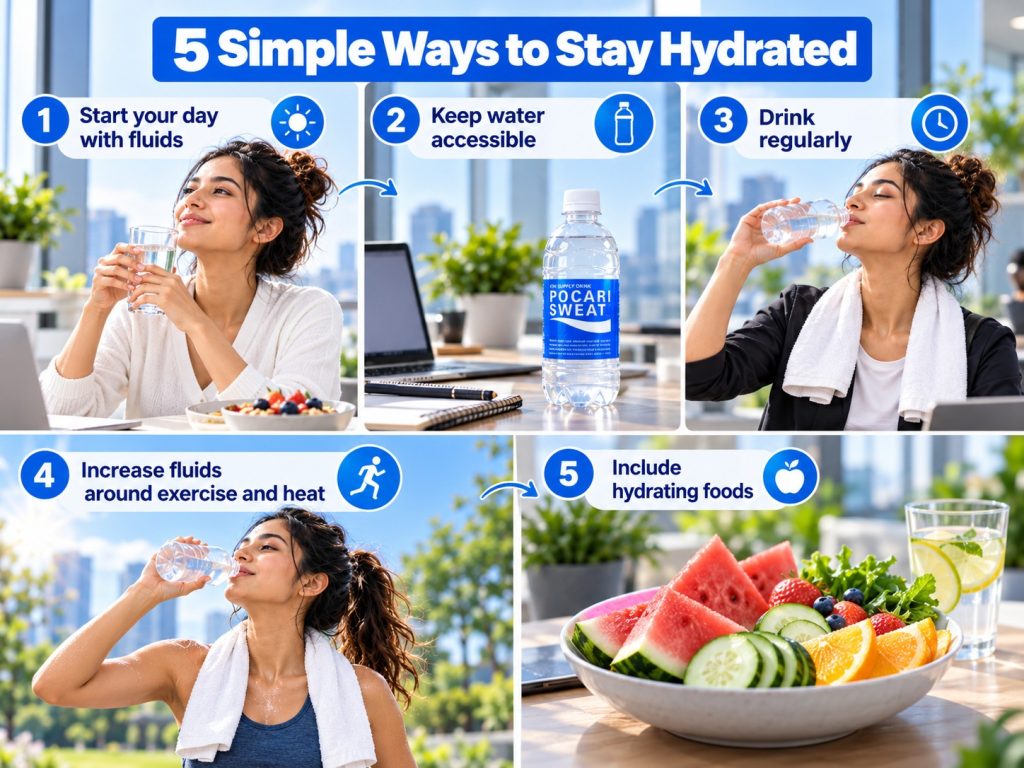
5 Simple Ways to Stay Hydrated Throughout the Day
- Start your day with fluids to counter any water lost during the night through breathing.
- Keep water in hand in case you forget it, a bottle on your desk or in your bag will get used; one in another room won’t.
- Drink regularly rather than waiting until you’re thirsty; thirst is a sign that you’re already slightly short.
- Increase your intake around exercise and hot weather to match what your day is asking of you.
- Include hydrating foods in your diet, like soups and fruit and veg that have a high water content.
Keeping these measures up will sort out your water intake per day without needing to think about it much.
How Can You Tell If You’re Drinking Enough Water?
Several factors are used to indicate your hydration status, none of which is definitive on their own. These factors for not drinking enough water:
- Thirst: a good indicator, but not always reliable
- Urine colour: light yellow is ideal; dark yellow means you need to drink more water.
- Frequency of urination: reduced frequency compared to normal
- Responses to heat and physical activity: Your body is used to a certain level of activity, and you will begin to feel thirsty at a lower level of activity if you are dehydrated.
None of these clues should be used alone to assess your hydration. Thirst and frequency of urination can be used in combination with each other to give a better indication of your hydration status.
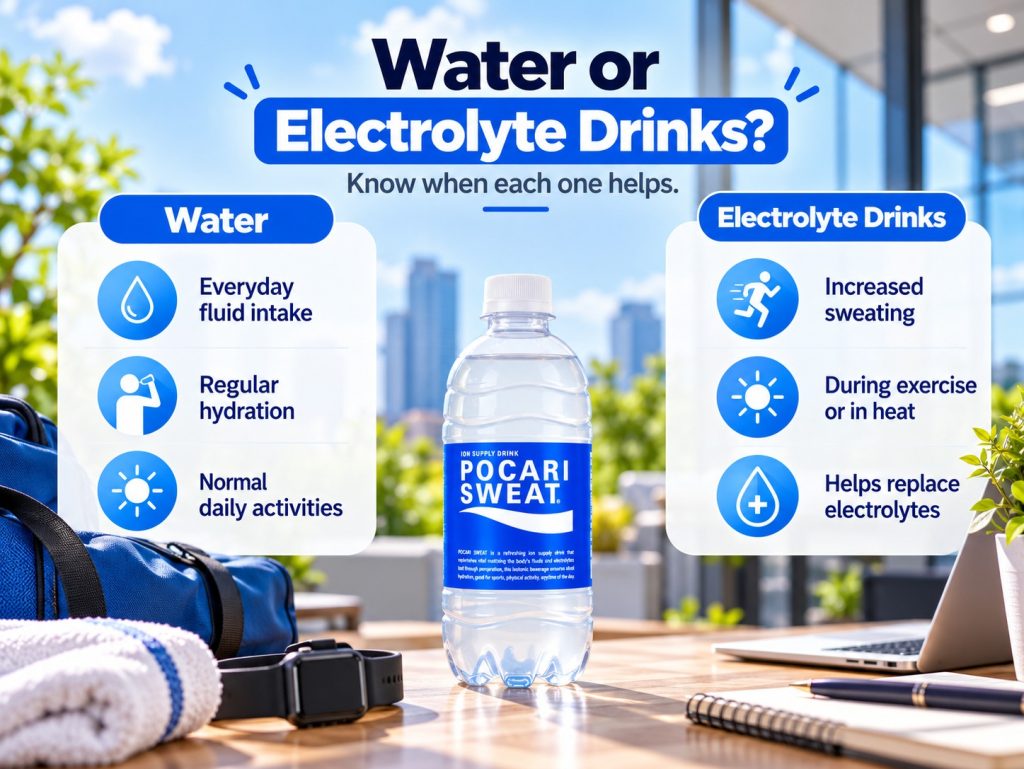
Water vs Electrolyte Drinks for Daily Hydration
Water is the obvious choice for most of your everyday hydration needs; it’s simple, ubiquitous, and perfectly adequate for low-exertion activities like sitting at a desk or running errands.
Things change when you’ve been exerting yourself sufficiently: a workout, a hot day, or a long period outside. Plain water doesn’t replace sodium and potassium, and electrolyte-containing drinks become genuinely useful at that point, covering what water alone leaves behind. Something like Pocari Sweat is designed specifically for this gap. Choosing between the two really comes down to activity and individual need rather than any fixed rule; our guide on top 5 isotonic drinks to replenish your body right is a useful comparison if you want to go deeper.
Final Thoughts on Daily Water Intake
How much water you should drink is not a question with one correct answer; it varies with your activity, the weather, your diet, and your own body. Pay attention to the signals your body is already giving you, such as thirst, urine colour, and how you’re feeling, rather than trying to adhere to a set number, and turn to an electrolyte drink like Pocari Sweat when sweat has genuinely taken more out of you than water alone replaces. Getting that balance right and staying properly hydrated becomes a less stressful thing to focus on.
FAQs
How much water should I drink every day?
Roughly eight glasses, around two liters, is a reasonable starting point, but your actual needs depend on activity, climate, and diet, so treat it as a baseline.
How much water should I drink based on my activity level?
More active days call for more fluid, particularly sessions past an hour or anything in the heat. Adjusting intake to match effort works better than sticking to a flat daily number.
Does coffee count toward daily fluid intake?
In moderate amounts it does still contribute to your overall fluid intake, though it’s worth balancing with water rather than relying on it as your main source.
How do I know if I’m drinking enough water?
Check thirst, urine colour, and how often you’re going to the toilet together rather than relying on just one. If all three look reasonable, you’re probably doing fine.
Do I need electrolytes every day?
Not necessarily on quiet, low-activity days, but water and food generally cover it. After proper sweating, exercise, or heat exposure, though, an electrolyte drink helps replace what water alone can’t.
Follow us on Instagram for hydration tips, wellness insights, product updates & more.