Most people think about hydration only once they’re mid-workout and already thirsty. By then you’re playing catch-up. A few crucial hydration tips, applied at the right moments, fix that before it becomes a problem. Getting hydration before, during, and after workouts right is really about timing, not just how much water you drink overall, and knowing when a plain glass of water will do and when something like Pocari Sweat earns its place. Get the three stages sorted and the rest of your session, and your recovery, tends to go a lot smoother.
Why Is Hydration Important During Exercise?
Sweat is doing more than cooling you down. It’s taking water and electrolytes, sodium and potassium mainly, out of your system at the same time. Lose enough of either, and performance drops before you even notice it happening; you just feel “off,” heavier, and slower to react.
Body temperature regulation depends on that sweat response working properly, and it can’t work properly if you’re running low on fluid to begin with. The harder or longer the session, the faster this all adds up. A 20-minute walk and a 90-minute run aren’t asking the same thing of your body, which is exactly why hydration during exercise needs to change with intensity, not just duration.
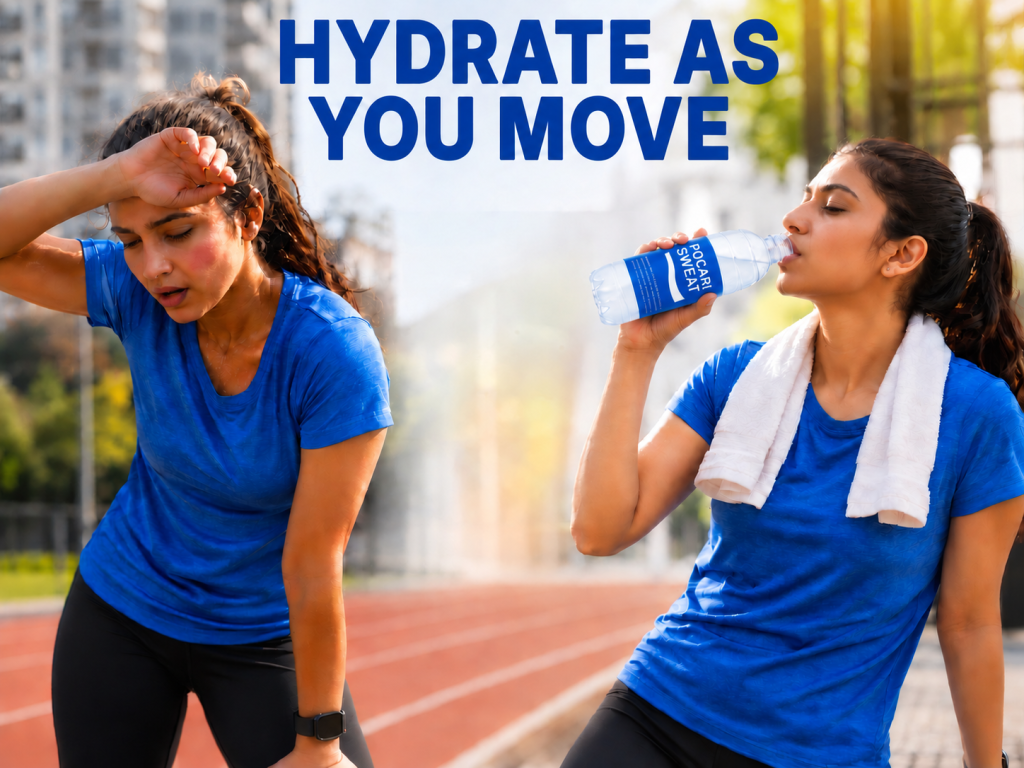
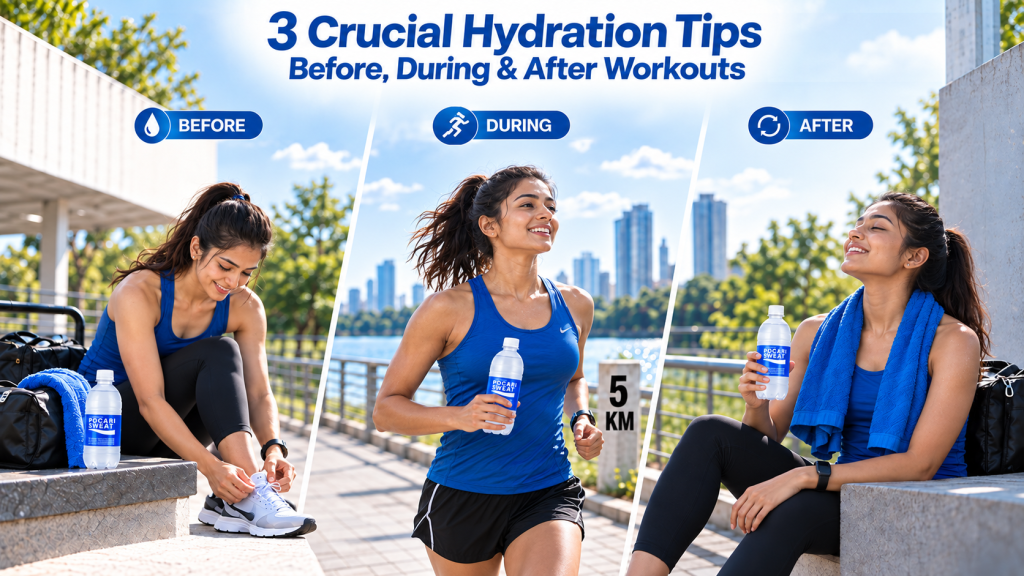
1. Hydration Before Your Workout
Starting a session already low on fluid puts you behind before you’ve even warmed up. Hydration before exercise isn’t about chugging a bottle five minutes before you start; it’s about not showing up dehydrated in the first place.
Drinking in the hours leading up to a workout, rather than right before it, gives your body time to actually absorb it instead of sloshing around uncomfortably. How much you need depends on you, your size, how much you typically sweat, and what the weather’s like that day. There’s no universal number that works for everyone.
For longer or more intense sessions, this matters even more. Going into an hour-long run under-hydrated means you’re trying to fix a deficit while also asking your body to perform, and that rarely goes well.
2. Hydration During Your Workout
Once you’re moving, fluid replacement becomes about keeping up with what you’re losing in real time, not making up for it afterwards. Wait too long and performance and focus both start slipping before thirst even kicks in properly.
A few things change how much you actually need mid-session:
Duration and intensity: Longer or harder sessions mean more sweat, plain and simple.
Temperature and humidity: Hot, humid conditions push your sweat rate up even if the workout itself hasn’t changed.
Sweating rate: This varies a lot from person to person; some people sweat heavily in cool conditions, others barely notice it in the heat.
For anything past about an hour, or anything intense in hot weather, electrolytes start to matter, not just water. This is where electrolytes after a workout start becoming relevant even mid-session, not only once you’ve finished.
3. Hydration After Your Workout
Rehydrating properly once you’re done matters just as much as anything you did beforehand. Whatever fluid and minerals sweat took out during the session still need replacing, and that doesn’t happen automatically just because you’ve stopped moving.
After a session with real sweating, plain water alone tends to fall short. This is the point where electrolytes after a workout genuinely pull their weight; sodium and potassium help restore the fluid balance that water on its own leaves half-finished. Something like Pocari Sweat does this well.
Pairing rehydration with a post-workout meal or snack helps too. Food with decent water content, and the sodium that often comes with a proper meal, works alongside whatever you’re drinking rather than against it.
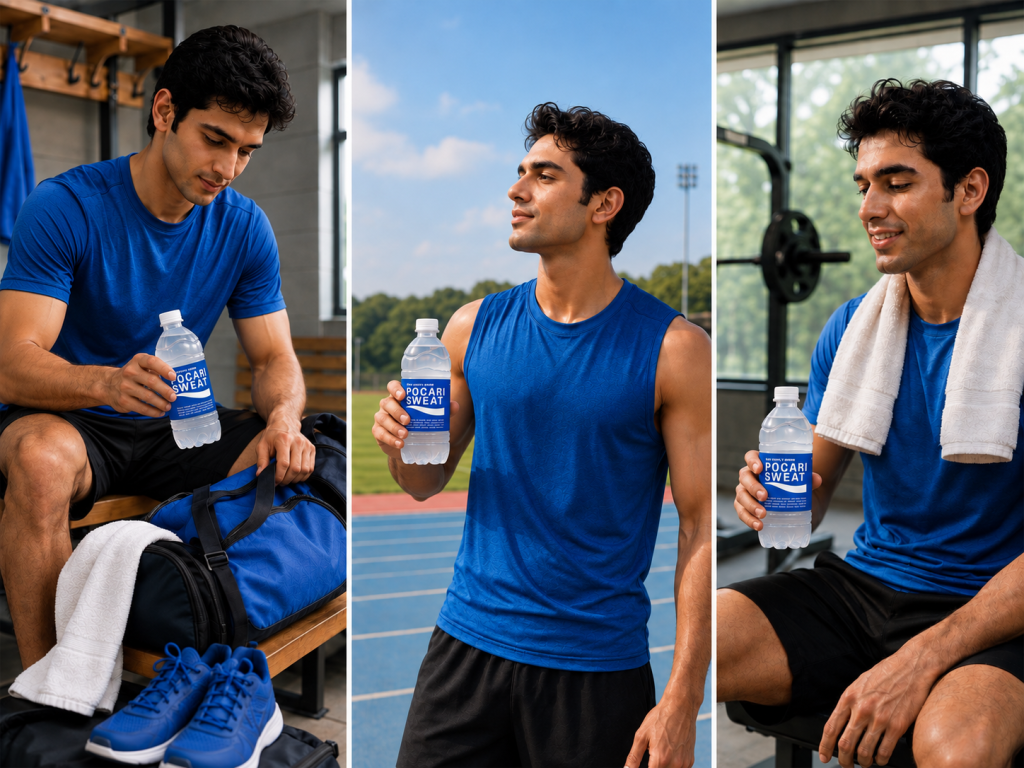
Water or Electrolyte Drinks: What Should You Choose?
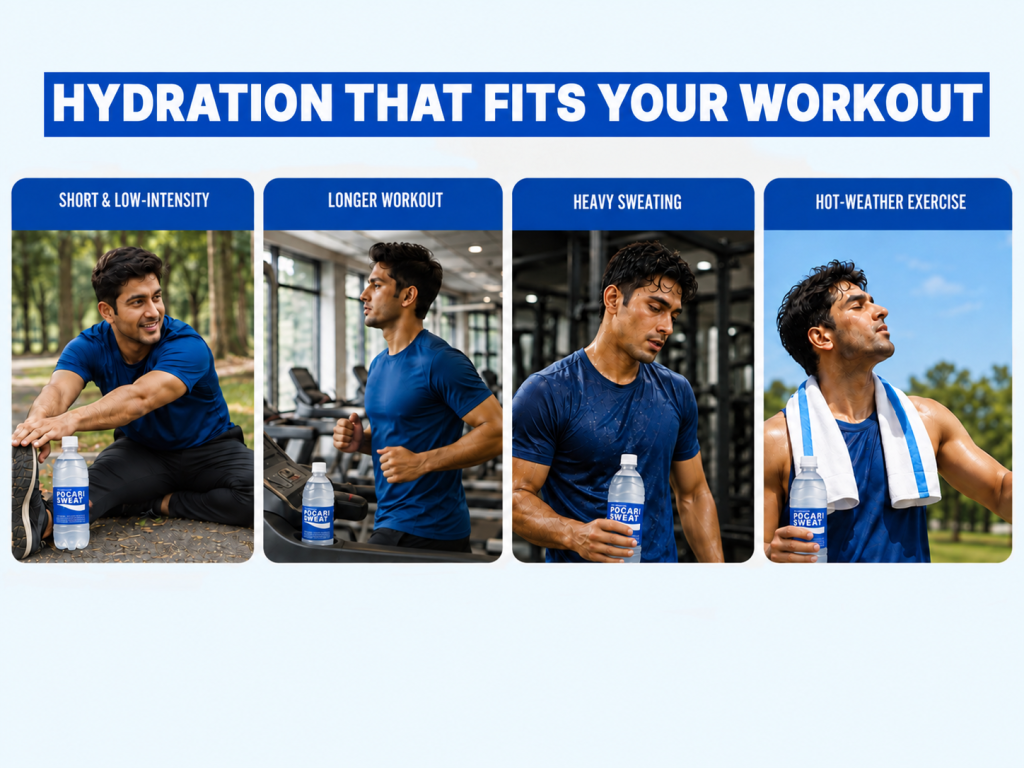
Short, low-intensity workouts: A quick walk or a light 20-minute session; water covers it. Nothing complicated needed here.
Longer workouts: Past the hour mark, you’re losing enough fluid and minerals that plain water starts to lag behind what your body actually needs.
Heavy sweating: If you’re drenched by the end, you’ve lost more than water, and it’s worth replacing more than water too.
Hot-weather exercise: Heat pushes sweat rate up regardless of how hard you’re actually working, so factor the conditions in, not just the session itself. Our top 5 isotonic drinks to replenish your body right is a decent place to compare options.
Common Workout Hydration Mistakes
Waiting until you’re very thirsty: Thirst shows up after you’re already behind, not before.
Drinking too little: Small sips are fine during a session, but stopping entirely because “it feels like enough” usually means it isn’t.
Ignoring weather conditions: Treating a 35-degree afternoon the same as a cool morning session is one of the more common exercise hydration tips people skip without realising.
Forgetting post-workout hydration: The session ending doesn’t mean the fluid loss stops mattering; recovery hydration gets skipped more than it should.
Treating every workout the same: A gentle yoga class and a heavy gym session aren’t asking the same thing of your body, so your hydration approach shouldn’t be identical either.
A Simple Before-During-After Hydration Routine
Before: Drink steadily in the hours leading up to your session, not all at once right before you start.
During: Sip regularly rather than waiting for a break, and bring electrolytes into the picture for anything over an hour or particularly intense.
After: Rehydrate soon after finishing, pair it with food, and lean on electrolytes if you’ve been sweating heavily.
Practical checklist: water bottle packed before you leave, a rough sense of the session length and conditions, something with electrolytes on hand for longer or hotter workouts, and a plan for what you’ll drink once you’re done, not just during.
Final Thoughts on Workout Hydration
Hydration before, during, and after workouts isn’t three separate tasks; it’s one routine with three checkpoints. Get the timing right, match your drink to how hard and how hot the session actually is, and rehydration stops being something you scramble to fix afterwards. A glass of water, some electrolyte hydration like Pocari Sweat when you’ve earned it, and a bit of attention to the conditions, that’s really the whole system.
FAQs
Should I drink water before working out?
Yes, ideally in the hours leading up to your session rather than right before it. This gives your body time to actually use it instead of just sitting in your stomach.
What should I drink during exercise?
Water is fine for shorter or lighter sessions. For anything past an hour, or intense activity in heat, a drink with electrolytes helps keep up with what you’re actually losing.
Is it important to hydrate after a workout?
Very. Sweat doesn’t stop mattering once the session ends, and skipping post-workout rehydration is one of the more common gaps in an otherwise solid routine.
Are electrolytes useful after exercise?
Yes, particularly after heavy sweating. They help replace what plain water can’t sodium and potassium lost through sweat, restoring fluid balance more completely.
Follow us on Instagram for hydration tips, wellness insights, product updates & more.